
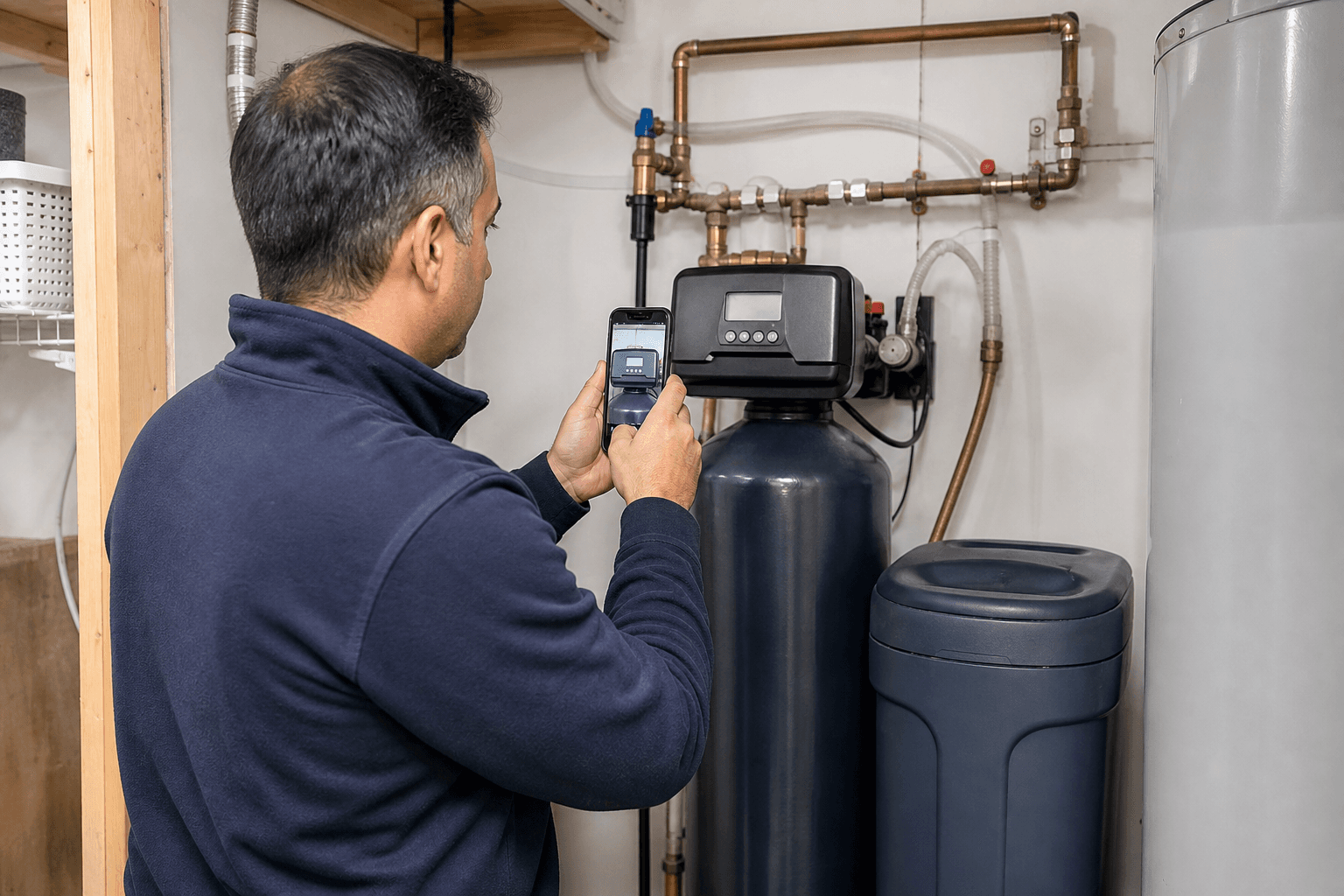
Mississauga Water Softener Checks Before You Book Service
Before assuming your water softener has failed, identify where the problem appears and whether it affects hot water, cold water, or both. Scale, spotting, and poor soap performance can support a softener assessment, but odour, discolouration, low pressure, or a hot-water-only symptom may involve plumbing, the water heater, or another water-quality issue.
Quick summary

- Check whether the symptom affects every tap or only one fixture.
- Compare hot and cold water at the same location.
- Observe the softener safely without opening pressurised components or changing settings blindly.
- Where appropriate, compare untreated source water with treated output and include hardness testing.
- Arrange an assessment before replacement if symptoms persist, the equipment leaks, or test results do not match what you observe.
Water softener symptoms and the next check to make
This table is a screening aid, not a diagnosis. Use it to decide what to observe next rather than selecting equipment immediately.
| What you notice | Useful next check | Other possible source |
|---|---|---|
| White or grey buildup | Check whether it appears throughout the home and compare untreated and treated water. | Hardness, a localized fixture issue, or softener performance. |
| Soap no longer lathers well | Compare several fixtures and record when the change began. | Water conditions, settings, or another quality issue. |
| Metallic taste or odour | Compare hot and cold water and check every tap. | The water heater, plumbing, or broader water quality. |
| Discolouration | Note whether it occurs after the water sits, during hot-water use, or continuously. | Plumbing, the water heater, or a contaminant. |
| Reduced pressure | Compare one fixture with other taps and check whether the whole home is affected. | A filter, plumbing restriction, fixture, or treatment-system condition. |
| The softener seems ineffective | Record the model, alerts, bypass position, recent changes, and visible leaks. | Settings, regeneration, equipment wear, or another water condition. |
Scale, poor soap lather, and unusual taste or odour are starting clues, not proof of a specific fault. Water-treatment diagnostic guidance also recommends considering where a symptom occurs and whether plumbing may be involved.
Check whether the issue affects every tap or only one fixture

A whole-home pattern is more relevant to incoming water or a treatment system than a problem limited to one faucet. A single affected tap may involve its aerator, fixture, or nearby plumbing. This does not prove the cause, but it can prevent an unnecessary softener replacement.
For a day or two, record which fixtures are affected, whether the symptom occurs with hot water, cold water, or both, when it appears, and whether the issue is scale, odour, colour, taste, pressure, or soap performance. Note any recent change to the softener, plumbing, water heater, or household water use.
Mississauga water-treatment guidance also recommends checking whether a symptom appears at every tap or only one fixture.
Compare hot and cold water at the same fixture
Run hot and cold water separately at the same tap. If odour, colour, taste, or buildup appears only in hot water, the water heater or hot-water plumbing deserves attention alongside the softener. If the symptom affects both temperatures at several fixtures, broader water conditions or treatment performance may be more relevant.
This comparison is not a diagnosis. It simply describes the pattern more accurately before service. For hot-water concerns, SO HVAC’s information on safe tankless water heater maintenance may help you frame questions without assuming the softener is responsible.
Look for scale, spotting, and changes in soap performance
White or grey deposits, spotted dishes, and soap that no longer lathers well can justify checking water hardness and softener performance. They may also result from a change in supply, a fixture-specific condition, or another treatment issue. Look for patterns across several fixtures, note whether the change was sudden or gradual, and photograph visible buildup for the technician.
Make safe observations around the softener
Without dismantling the unit, check whether:
- The control has power or displays an alert.
- There is water around the equipment or nearby connections.
- The unit appears to be in bypass rather than normal operation.
- The salt or brine area looks unusually low, bridged, wet, or otherwise different.
- A power interruption, plumbing change, or setting change coincided with the symptom.
Do not open pressurised parts, handle treatment chemicals, disconnect tubing, or force a valve. If there is an active leak or you cannot tell whether the unit is safe, stop at observation and arrange an assessment. SO HVAC provides water softener evaluations and service guidance.
Review settings and regeneration observations without changing them blindly
Record the make, model, displayed settings, alerts, and any regeneration behaviour you have noticed. Controls vary by equipment. Avoid changing hardness, capacity, or regeneration settings simply because a symptom appeared; an incorrect adjustment can make the system harder to assess. Give the model information and your notes to the person evaluating the unit.
Treat low water pressure as a separate clue
Low pressure should not automatically be attributed to a softener. Check whether it affects one tap or the whole home, whether hot and cold pressure differ, and whether pressure changes when other fixtures run. Clogged filters, plumbing restrictions, and fixture problems can all be involved.
Compare untreated and treated water when testing the system
Performance is clearer when untreated source water is compared with treated output. Hardness is a key parameter because the comparison can show whether the system is changing the water as expected. Technical servicing guidance recommends comparing source and treated water rather than relying only on appearance.
The appropriate testing depends on the symptom and water source. Testing may include hardness, pH, chlorine, iron, bacteria, lead, or other factors. These answer different questions: hardness relates to softener performance, while other results may point toward filtration, plumbing, disinfection, or another treatment approach. Water testing information for Mississauga homes explains several parameters that may be considered.
Know when the problem may be water quality rather than softening
A softener should not be assumed to address every concern. Odour, discolouration, metallic taste, and hot-water-only changes may require a different investigation. For well-water homes, hardness, iron, and sulphur should be assessed before selecting treatment. Well-water treatment information explains why these conditions need separate testing.
If you are unsure whether softening is appropriate, review questions to ask about water softener alternatives before committing to a system.
Decide between troubleshooting, service, repair, or replacement
- Continue observing when the symptom is minor and isolated, with no leak or major pressure change.
- Arrange testing or an assessment when symptoms affect several fixtures or persist after basic observations.
- Seek service or repair guidance when there is an alert, leak, unclear control, regeneration concern, or test-supported performance problem.
- Consider replacement only after diagnosis when equipment condition, verified performance, recurring faults, and household suitability have been reviewed.
A single layer of scale or one unusual smell is not enough evidence to replace a system. The decision should account for the actual water condition, equipment performance, and whether repair can address the verified problem.
When to arrange a professional water softener assessment
Arrange an assessment when a symptom persists without a clear cause, the unit leaks, controls are unclear, water quality changes noticeably, or observations conflict with test results. Gather the model and serial information if accessible, photographs, your symptom log, hot-and-cold comparison, service records, and any test results. An in-home assessment can help evaluate water quality before equipment is recommended; Mississauga water-treatment information describes this evaluation-first approach.
Use the checks to choose the next sensible step
Good water softener diagnostics in Mississauga begin with the symptom pattern, not a replacement recommendation. Check affected fixtures, compare hot and cold water, observe the softener safely, and distinguish hardness clues from odour, discolouration, pressure, and other quality concerns. When appropriate, compare untreated and treated water using tests that match the symptom.
If the cause remains unclear, an evaluation is usually more useful than changing settings or replacing equipment based on one sign. SO HVAC serves Mississauga with water-system evaluations and offers a free, independent second opinion with no obligation to purchase. Book an assessment with SO HVAC before deciding on service, repair, or replacement.
Frequently asked questions
Can scale on faucets prove that my water softener is not working?
No. Scale can support a hardness or softener-performance investigation, but it may also involve a localized fixture or another water condition. Testing and a broader symptom pattern provide stronger evidence.
Why compare hot and cold water?
A hot-water-only symptom may involve the water heater or hot-water plumbing rather than the softener. The comparison helps describe where the issue begins.
What tests may help?
Hardness testing is important for softener performance. Depending on the symptom and water source, pH, chlorine, iron, bacteria, lead, or other tests may also be relevant.
When should I request an independent assessment?
Request one when symptoms persist, equipment leaks, controls are unclear, results conflict, or you are being advised to replace the system without a clear explanation of the cause.