
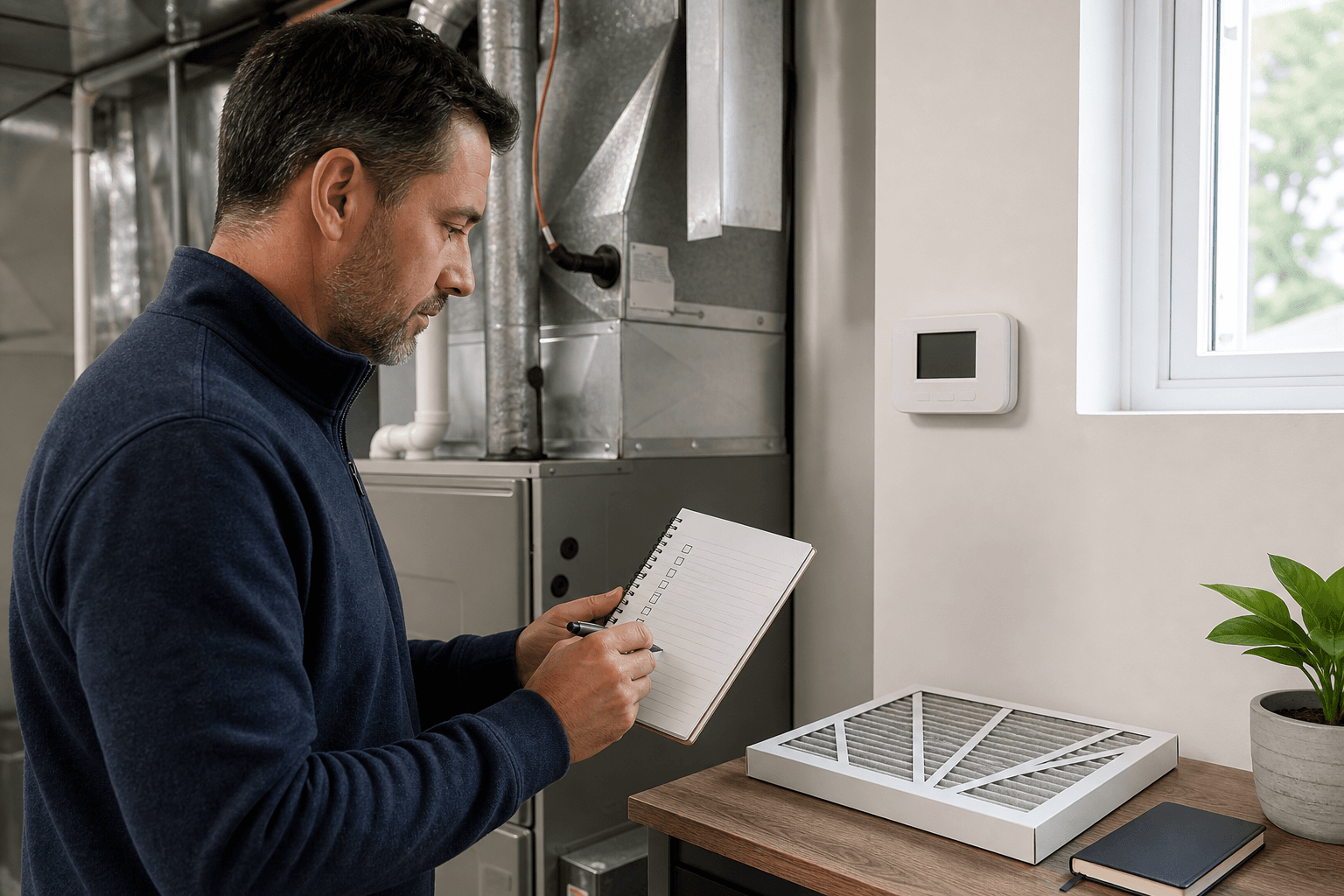
What Should Your Preventative HVAC Schedule Include?
A preventative HVAC schedule should combine equipment-specific instructions, seasonal preparation, safe homeowner observations, and professional maintenance before periods of high heating or cooling demand. In Ontario, that means reviewing heating equipment before cold weather, cooling equipment before summer, and heat pumps, water systems, ventilation, and indoor air quality equipment according to their own requirements.
The goal is not to promise lower energy bills or prevent every breakdown. It is to notice changes earlier, keep useful records, and make better decisions about maintenance, repair, replacement guidance, or a second opinion.
Quick summary

- List every system in your home and keep its manuals, model information, warranty details, and service history together.
- Before heating and cooling seasons, check only accessible, low-risk items such as filters, thermostat behaviour, airflow, visible damage, leaks, odours, and unusual sounds.
- Do not open, adjust, or repair gas, electrical, combustion, refrigerant, pressurized-water, or sealed components.
- Record symptoms and photographs, then arrange professional maintenance or an assessment when a concern exceeds a safe visual check.
- If a major replacement is recommended and the explanation or quote is unclear, consider an independent second opinion before committing.
Preventative HVAC schedule at a glance
Use this table as a planning tool, not as a universal service interval. Manufacturer instructions, equipment type, age, condition, usage, warranty requirements, and service history may change what is appropriate.
| Planning point | Systems to review | Safe homeowner focus | When to arrange professional help |
|---|---|---|---|
| Before heating season | Furnace, boiler, heat pump, thermostat | Filter condition, thermostat response, airflow, visible damage, unusual sounds or odours | Before operating equipment with gas, combustion, electrical, venting, leak, or safety concerns |
| Before cooling season | Air conditioner, heat pump, thermostat | Filter, airflow, outdoor-unit access and visible obstructions, unusual noise, water or ice | For refrigerant, electrical, frozen-coil, wiring, capacitor, or unsafe-access concerns |
| Throughout the year | Water heater, tankless unit, softener, reverse osmosis system | Accessible connections, leaks, hot-water delivery, water-quality changes, service records | For active leaks, gas or electrical concerns, pressure issues, hot surfaces, or internal components |
| As applicable | ERV, HRV, filtration, humidification, dehumidification | Accessible filter condition, controls, airflow, moisture, visible damage, unusual noise | When equipment needs internal service, diagnosis, adjustment, or repair |
Step 1: List every system in your home

Start with an inventory. Include the furnace or boiler, air conditioner, heat pump, water heater or tankless unit, water softener, reverse osmosis equipment, ventilation equipment, air cleaners, humidifiers, dehumidifiers, and thermostats.
Record the manufacturer, model if available, approximate installation date, location, and any system serving a particular area. These systems are not interchangeable: a furnace, heat pump, tankless water heater, and ERV have different maintenance requirements. A complete list also helps a technician understand how your home comfort systems work together.
Step 2: Check the equipment instructions and service history
Gather owner’s manuals, installation information, warranty documents, previous invoices, filter specifications, and notes about recurring symptoms. Look for the manufacturer’s instructions on cleaning, filter selection, inspection, and service. Do not assume that a routine suitable for one model applies to another.
Note when a filter was changed, when a symptom first appeared, and whether a previous technician identified a limitation or pending repair. A clear history can make an appointment more efficient and help you ask what is required now versus what can be planned later.
Step 3: Prepare heating equipment before cold weather
Before your home depends heavily on heating, observe the system during normal operation. Check whether the thermostat responds as expected, supply and return-air areas are unobstructed, and the filter appears loaded or damaged. Listen for new rattling, grinding, banging, or repeated starting and stopping. Look for visible damage, moisture, staining, or unusual odours around accessible areas.
For boilers and other hydronic systems, note changes in heating performance, visible leaks, unusual sounds, and accessible signs of damage. Do not remove covers or attempt to adjust burners, valves, wiring, venting, controls, or other internal components. Professional heating maintenance may involve checks and adjustments that are not suitable for a homeowner.
Stop point: when heating checks require professional help
Stop the check and seek professional help if you notice a gas odour, unusual burning smell, combustion concern, damaged venting, electrical concern, water leak, suspected carbon-monoxide issue, or an area that cannot be accessed safely. Do not open, adjust, repair, bypass, or repeatedly operate equipment with these symptoms. If you suspect immediate danger, leave the area and contact the appropriate emergency service.
A visual inspection cannot confirm that every heating component is safe or functioning correctly. Treat concerning observations as a reason for assessment, not an invitation to troubleshoot internal gas, electrical, combustion, or venting parts.
Step 4: Prepare air conditioning before summer demand
Before warmer weather arrives, check the thermostat, filter, and accessible airflow paths. Notice whether the system starts and stops normally, rooms receive expected airflow, and there are new sounds, odours, visible water, or ice. Around the outdoor unit, remove only loose, accessible obstructions that you can clear without opening the equipment or using unsafe access.
Record symptoms rather than trying to diagnose the cause. Poor cooling, ice, water, or unusual noise can have several possible sources. A professional can determine whether the issue involves maintenance, repair, airflow, or a larger equipment concern.
Stop point: do not troubleshoot refrigerant or electrical faults
Do not open electrical panels, handle wiring or capacitors, work on refrigerant lines, remove covers, or attempt to correct a frozen coil yourself. Stop if you notice a burning smell, damaged wiring, repeated tripping, refrigerant-related concerns, persistent ice, or unsafe outdoor or rooftop access. Arrange a professional assessment instead of repeatedly operating a system with a concerning symptom.
Step 5: Include heat-pump checks for Ontario’s seasons
A heat pump needs a schedule covering both heating and cooling because it may operate across Ontario’s changing seasons. Observe the thermostat mode, airflow, unusual sounds, outdoor-unit clearance, and changes in comfort or operating behaviour. Do not use a surface observation to diagnose refrigerant, electrical, defrost, or control problems.
For winter planning, follow the equipment’s instructions and consider the conditions in which it operates rather than assuming a heat pump follows a furnace-only routine. For additional context, see SO HVAC’s heat-pump winter performance checklist.
Step 6: Review water-heating and water-treatment equipment
Include conventional water heaters, tankless water heaters, water softeners, and reverse osmosis systems in your inventory. Look at accessible areas for moisture, staining, damaged connections, or other visible changes. Note changes in hot-water delivery, unusual sounds, odours, or water quality, and keep service information available.
Follow the instructions for your specific unit. Do not dismantle equipment, adjust gas or electrical components, work on pressure-related parts, or attempt an internal repair. If you are evaluating a drinking-water filtration proposal, these reverse osmosis checks can help you review a quote without treating every system as identical.
Stop point: respond promptly to leaks, hot surfaces, gas, and pressure concerns
Stop checking a water system if there is an active leak, gas odour, electrical concern, abnormal discharge, damaged connection, exposed hot surface, suspected pressure problem, or equipment that cannot be reached safely. Do not remove covers or adjust valves, controls, or pressurized components unless the equipment instructions specifically identify a safe homeowner action.
Water damage can worsen while you are trying to identify its source. If it is safe to do so, keep people away from hot or wet areas and arrange appropriate professional assistance.
Step 7: Add ventilation and indoor air quality equipment
Review any ERV, HRV, filtration, humidification, or dehumidification equipment that affects indoor comfort. Where the instructions permit, check accessible filters and note the condition of controls, airflow, visible moisture, damage, or unusual noise. Different systems have different purposes and maintenance requirements, so do not substitute one unit’s routine for another.
If you are unsure whether your home has an ERV or HRV, read this ERV and HRV comparison for Ontario homes. Internal service, diagnosis, adjustment, and repair should be left to a professional when they exceed the manufacturer’s safe homeowner instructions.
Step 8: Record what you find and arrange the right next step
A simple record turns scattered observations into useful information. For each system, write down:
- Date and equipment reviewed
- Filter condition or replacement date, where applicable
- Thermostat or control behaviour
- Changes in airflow, heating, cooling, hot-water delivery, or water quality
- Unusual sounds, smells, moisture, ice, or visible damage
- Photographs of accessible concerns
- Relevant manufacturer instruction or previous service note
- Action taken and whether follow-up is required
Bring this record to a service appointment. It can help a technician understand when a symptom occurs and help you compare transparent quotes by separating an observed problem from a proposed solution.
Step 9: Schedule professional maintenance when the system or task requires it
Arrange professional maintenance when the manufacturer calls for work beyond a safe homeowner check, when equipment has recurring symptoms, or when you want an evaluation before a high-demand season. Timing should reflect system type, instructions, condition, age, usage, and seasonal demand rather than one universal interval.
Professional help may involve routine maintenance, a repair assessment, an installation review, or emergency support. Ask what was inspected, what was found, what is required now, what is optional, and what can be monitored. Maintenance should not automatically become a replacement recommendation. If replacement is proposed, ask for the reason, alternatives, equipment fit, and trade-offs in writing.
How to choose between a check, maintenance, repair, or second opinion
| What you observe | Most appropriate next step |
|---|---|
| The system operates normally and you have a routine filter or visible-condition task | Complete the safe check, follow the equipment instructions, and record the date. |
| A recurring symptom, performance change, unusual sound, odour, leak, or control problem appears | Request a repair assessment rather than guessing at the cause. |
| There is a gas, electrical, combustion, refrigerant, active-leak, pressure, or unsafe-access concern | Stop the check and seek appropriate professional or emergency help. |
| A contractor recommends major work or replacement and you are unsure why | Ask for an independent evaluation and compare the explanation, options, and quote before committing. |
Independent HVAC advice is useful when you need to understand whether a repair is practical, whether replacement is genuinely required, or whether a proposed system suits your home. A second opinion does not replace urgent safety help, but it can provide clarity before a major non-emergency decision.
A saveable preventative HVAC checklist
- Inventory: List your furnace, boiler, air conditioner, heat pump, water-heating, water-treatment, ventilation, and indoor air quality equipment.
- Instructions: Gather manuals, model details, filter specifications, warranty information, and service history.
- Heating season: Check accessible filters, thermostat response, airflow, visible condition, sounds, and odours.
- Cooling season: Check the filter, thermostat, airflow, outdoor-unit access, visible water or ice, and unusual operation.
- Heat pump: Include both heating and cooling observations and follow equipment-specific guidance.
- Water systems: Look for accessible leaks or damage and note changes in hot-water delivery or water quality.
- Indoor air quality: Review accessible filters, controls, airflow, moisture, and unusual noise where instructions permit.
- Document: Record dates, symptoms, photographs, manufacturer notes, and actions taken.
- Stop safely: Do not work on gas, electrical, combustion, refrigerant, pressurized, or inaccessible components.
- Choose the next step: Decide whether you need a safe routine check, planned maintenance, a repair assessment, emergency help, or an independent second opinion.
Frequently asked questions
How often should I review my preventative HVAC schedule?
Review it before periods of higher heating or cooling demand and whenever equipment, usage, symptoms, or manufacturer instructions change. There is no single interval that suits every home.
Which HVAC maintenance checks can a homeowner safely do?
Homeowners can generally observe accessible filters, thermostat behaviour, airflow, visible damage, unusual sounds or odours, and outdoor-unit obstructions that can be cleared safely. Gas, electrical, combustion, refrigerant, pressurized, and internal work requires professional help.
Should heat pumps have a different maintenance routine in Ontario?
Yes. Because a heat pump may provide both heating and cooling, your schedule should include observations for both modes and follow the specific equipment instructions.
When should a maintenance concern become a repair assessment?
Arrange an assessment when a symptom recurs, comfort changes, unusual noise or odour appears, or you notice water, ice, damage, or abnormal operation. Stop immediately for safety-related concerns.
Can a second opinion help if a contractor recommends replacing my HVAC system?
Yes. An independent evaluation can help clarify whether replacement is required, what alternatives exist, and whether the proposed equipment and quote fit your home. It does not replace emergency assistance for an immediate hazard.
Use the schedule to make a clearer HVAC decision
A useful preventative HVAC schedule is not a single date on the calendar. It is a repeatable process: identify each system, follow its instructions, prepare for seasonal demand, observe only what is safe, document changes, and involve a professional when the task or risk exceeds your limits. This supports better decisions without assuming that maintenance guarantees savings, prevents every failure, or makes replacement necessary.
Use a routine check when everything appears normal and the task is clearly safe. Choose planned maintenance when the equipment or manufacturer guidance calls for professional work. Request a repair assessment when performance changes or symptoms recur. If a major replacement is recommended and you want clearer, independent guidance, SO HVAC is an Ontario-based company serving Mississauga, Oakville, Burlington, Brampton, Milton, Hamilton, Niagara, Cambridge, Guelph, and Orangeville, with HVAC and water-system evaluations, maintenance, repairs, installations, emergency support, and free, no-obligation independent second opinions. Contact SO HVAC through its website before making a major home comfort decision.