
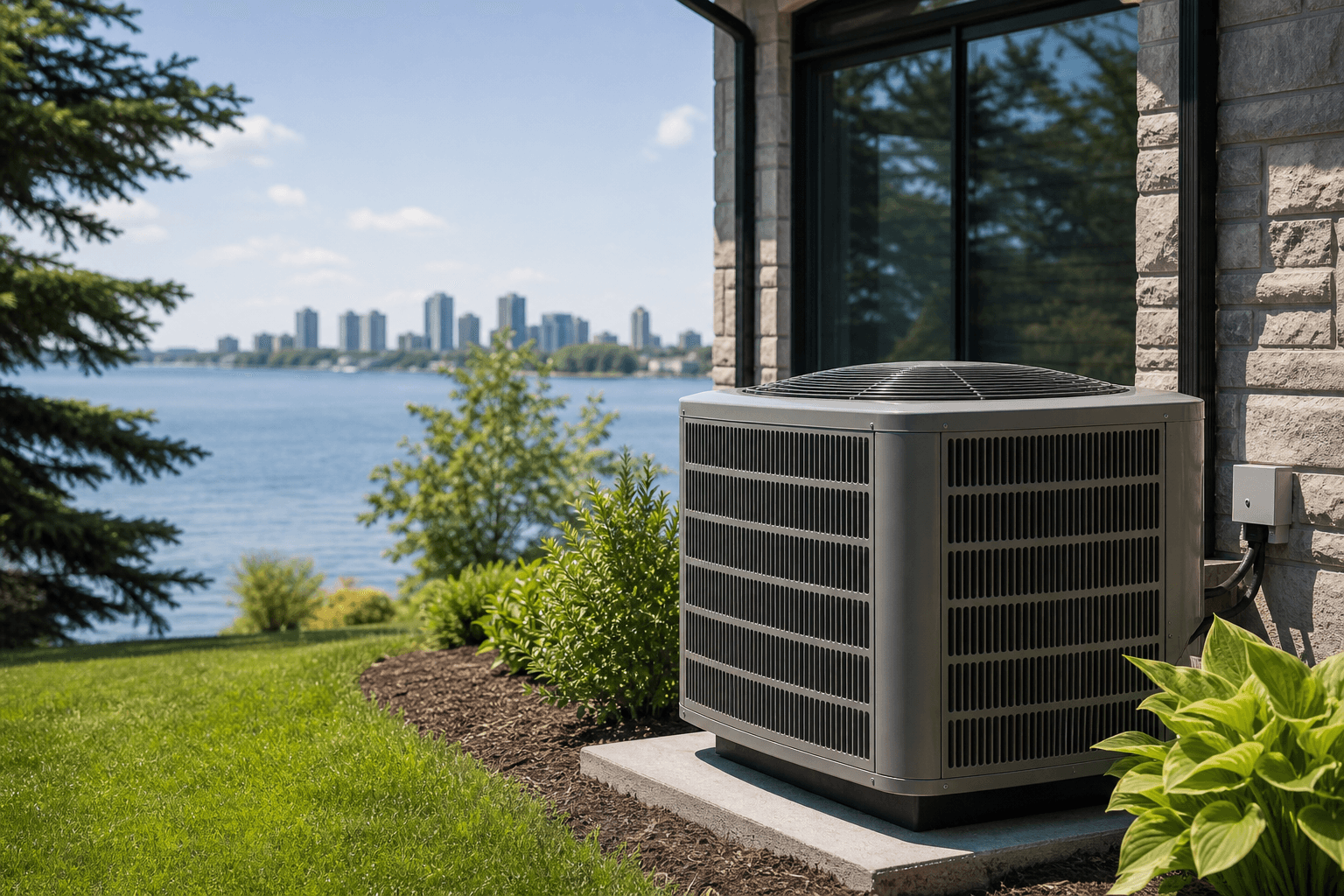

Oakville HVAC rebates seven-point decision checklist
If you are searching for oakville HVAC rebates, this seven-point checklist helps you decide whether to pursue incentives now, what paperwork and installer requirements typically matter, and when a free, independent second opinion makes sense. SO HVAC provides a no-pressure second opinion to help homeowners interpret quotes and confirm rebate compliance before committing to work. Read these seven checks so you can act confidently and avoid common mistakes when a rebate is part of the decision.
1. Identify which rebate programs could apply to an Oakville home
Start by mapping the likely program types that can apply in Oakville: provincial or province-wide incentives, utility-run offers, and time-limited grants or contractor promotions. Rules, eligible technologies and deadlines vary between programs, so treat any third-party summaries as a starting point rather than a final authority.
- Province-wide or provincial-administered incentives often show up on official energy program portals and typically target efficient heat pumps, high-efficiency furnaces, or comprehensive home retrofits.
- Utility programs may focus on peak-demand reductions or natural gas savings and can require specific application steps linked to your utility account.
- Contractor or manufacturer special offers can be useful, but verify whether the offer includes required paperwork or whether it simply advertises a rebate that still needs formal program approval.
As an example of a third-party summary of an initiative, a local contractor page describes the Home Renovation Savings program involving Enbridge Gas and Save on Energy. Use pages like that as prompts to find and confirm the official program terms on the program administrator sites rather than relying on secondhand descriptions. Where in doubt, collect the program name and lookup the official program page referenced by the administrator or utility.
2. Confirm contractor and equipment requirements before you commit
Many rebate programs specify installer credentials and approved equipment. That matters because eligibility can depend on who does the work, not only what is installed. Before you sign, verify the installer and the exact models they plan to install.
- Ask the contractor whether the program requires the installer to be registered or certified for that specific incentive. Request the registration number or certificate so you can verify it with the program administrator.
- Insist that every quote include make, model and serial number ranges for the proposed equipment. If the program lists eligible models, you will need those details to cross-check eligibility.
- Confirm whether the program requires a pre-approval step, a site visit by the program administrator, or specific commissioning documentation after install.
Document these answers in writing. A contractor who is unwilling to provide model numbers, registration details or a written confirmation of what they will supply is a legitimate reason to pause. That written documentation also speeds any claim submission and prevents disputes later.
3. Match timing to equipment life and repair versus replacement

Rebates are tempting, but timing and system life should guide the decision. Use a practical set of questions to decide whether to repair now, delay for a rebate-eligible replacement, or replace early to capture an incentive.
- How old is the existing equipment and what is its expected remaining life? Typical useful life ranges are a guideline, not a rule, so consider recent repairs and failure patterns.
- What is the cost of the immediate repair versus the likely near-term cost of replacement? If repairs are frequent or costly and the unit is near the end of its life, replacement can be the lower-risk choice even without a rebate.
- Does the rebate require pre-approval or a specific installation window? If so, confirm deadlines and whether delaying a non-urgent replacement to meet the rebate rules is practical for your comfort and safety.
SO HVAC’s evaluation-first approach can help by providing an independent assessment of a system’s condition. That assessment will usually include recommendations about whether a repair is reasonable or whether replacement is the prudent choice, independent of any contractor incentive to sell equipment.
4. Prioritise right‑sizing, scope and system compatibility
Efficiency incentives generally assume correctly sized systems and full scope work where required. An improperly sized heat pump, missing duct repairs, or incompatible controls can reduce real-world savings and in extreme cases affect eligibility for a performance-based rebate.
- Request a heat-loss or load calculation and a short explanation of how the proposed capacity was chosen. The calculation should be documented in the quote or a supporting attachment.
- Confirm whether supporting work such as duct sealing, air sealing, ventilation upgrades, or control wiring is included in the scope. Partial upgrades leave system-level problems unresolved.
- Compare quoted scopes across contractors to see whether differences are substantive. If one quote includes necessary supporting work but another does not, the lower price may be incomplete.
Right-sized equipment delivers better comfort, lower operating cost, and fewer callbacks. If the quoted work does not clearly address whole-system impacts, ask for clarification or an independent review before assuming rebate eligibility.
5. Gather the paperwork rebate claims usually require

Organize documentation as you collect quotes so you are ready when it is time to apply. Typical items requested by rebate administrators include a pre-approval letter if required, a final invoice listing model and serial numbers, proof of payment, and commissioning or inspection reports.
Label and back up files so submission is quick. Common document names include invoice, commissioning report, permit, proof of payment, and pre-approval notification. Missing or mismatched information is the usual reason for denied claims, so keep clear, dated records from the contractor and the program administrator.
What to collect before you call for a second opinion
- At least one detailed quote that lists equipment make and model numbers, capacities, and a clear scope of work.
- The original recommendation or quote that prompted the rebate question, including any program names, pre-approval emails or reference numbers.
- Photos of existing equipment and the mechanical space, plus make and model details of current units if available.
- Proof of home ownership or utility account details if the program ties eligibility to the account holder.
- Any relevant permit, inspection report, or prior rebate paperwork for the same systems.
Having this material ready helps a reviewer focus on eligibility and scope, and it shortens the time to a clear recommendation.
6. Watch for red flags that can void a rebate claim
Certain practices commonly lead to rebate denials. Spot these warning signs early and verify program rules before proceeding.
- Missing permits or skipped inspections. Some programs explicitly require municipal permits and a final inspection report. If a contractor suggests avoiding permits, treat that as a strong warning sign.
- Unapproved installers, altered invoices or invoices that omit model and serial numbers. Rebates often require invoices that match the actual installed equipment and list serial numbers.
- Retroactive claims where pre-approval was required. If a program mandates pre-approval, retroactive requests are commonly rejected.
- Significant DIY work on core system elements. Programs may require certified installations only, and owner-installed components can jeopardize eligibility.
If you encounter any of these issues, pause the project and confirm program rules with the administrator. A short delay to verify compliance is far better than a denied claim after installation.
7. When to pause and book a free second opinion
Book an independent second opinion when any of the following apply: you received conflicting quotes, a full replacement was recommended without clear diagnostics, required paperwork or pre-approval steps are unclear, or you suspect the quoted scope does not include necessary supporting work. An independent review helps you confirm whether the work is necessary and whether the quoted scope and documentation align with rebate requirements.
SO HVAC offers a free, no-pressure second opinion that assesses equipment and documentation, explains required versus optional work in plain language, and helps homeowners compare quotes for rebate compliance. Use the appointment to clarify eligibility risks, confirm right-sizing and scope, and identify any paperwork gaps before committing to a contractor or cancelling needed repairs.
Frequently asked questions
Will a second opinion change my eligibility for Oakville HVAC rebates?
An independent second opinion does not change the program rules or the eligibility criteria. What it can do is clarify whether the recommended equipment, scope and documentation meet the program conditions and whether timing or scope should be adjusted to preserve eligibility. Bring the program name or any pre-approval materials to the appointment so the reviewer can compare them to the quotes.
How do I confirm an installer is approved for a specific rebate program?
Ask the installer for any program registration number, certificate or credential they use for the incentive. Then contact the program administrator or search the program portal for the installer by name or registration number. If you cannot find the installer on the program’s approved list, ask the administrator for confirmation before work begins.
Can I submit for an Oakville HVAC rebate after installation is complete?
That depends on the individual incentive. Some programs allow post-installation claims when all documentation is provided. Other programs require pre-approval before purchase or installation. Always check the specific program terms before scheduling work to avoid losing eligibility because of timing rules.
Are heat pumps usually eligible for Oakville HVAC rebates and where should I verify that?
Heat pumps are commonly included in many provincial and utility incentive programs because they reduce fossil fuel use, but eligibility and technical criteria vary. Verify whether your proposed model, installation scope and installer meet the program’s requirements on the official program pages or by contacting the program administrator. Use the official program guidance rather than relying only on a contractor’s verbal assurance.
Key resources to check before you proceed include official program portals and municipal retrofit guidance. For an independent, no-pressure review of your quotes and documentation, book a free second opinion with SO HVAC. A second opinion can help you interpret eligibility rules, confirm that quoted work will meet rebate requirements, and identify any paperwork gaps before you sign.
SO HVAC — book a free second opinion to review your Oakville HVAC rebates options and the documentation you need before you commit.
Reference example: Home Renovation Savings program summary on a local contractor resource at Special Offers Furnaces & Air Conditioners | Oakville, Ontario, used here as a prompt to verify official program pages.