
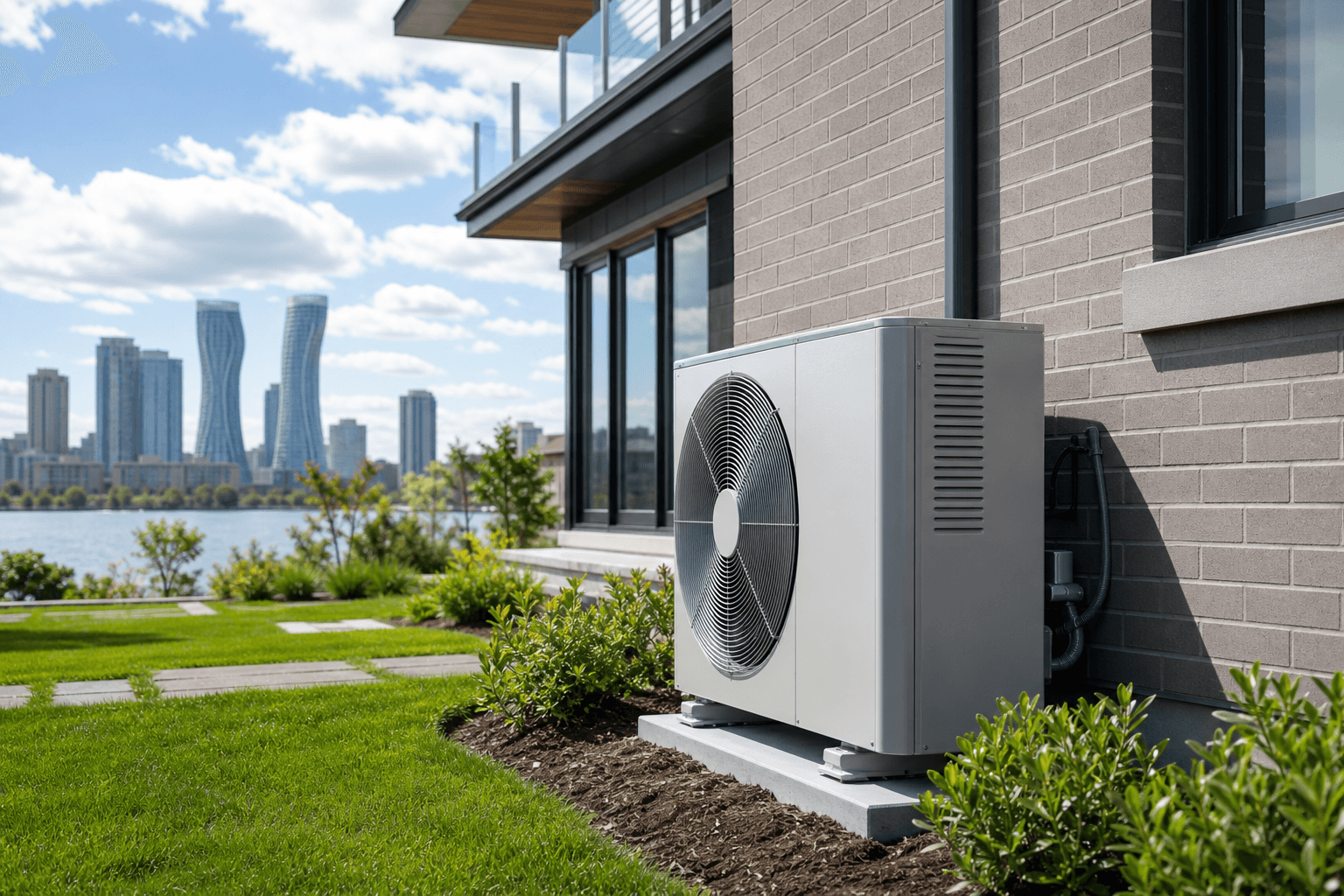

Mississauga heat pump guide: What a heat pump is and why it matters
This guide explains, in plain language, what a heat pump does, the common types Ontario homeowners see, how they perform in a four-season climate, and the specific things to check when comparing quotes. If you are deciding whether to replace or retrofit your heating and cooling, this article helps you ask the right questions and points to a free, independent option to get an unbiased evaluation.
What a heat pump is and the basics of how it works
A heat pump moves heat from one place to another rather than creating heat by burning fuel. In winter it extracts heat from outdoor air and moves it inside. In summer it reverses and moves heat from inside to outside, so a single system can both heat and cool your home. Common performance metrics include coefficient of performance (COP), heating seasonal performance factor (HSPF), and seasonal energy efficiency ratio (SEER).
For a consumer overview and a checklist of questions to ask installers, see Natural Resources Canada’s consumer booklet on heat pumps: Heating and cooling with a heat pump.
Common heat pump types for Mississauga homes
- Air-source split systems. The most common choice for homes with forced-air ducts. One outdoor unit connects to one or more indoor units through refrigerant lines and can be ducted to existing vents.
- Ductless mini-split systems. One outdoor unit paired with wall-mounted indoor units, ideal for homes without ducts, for zoning, or for additions where running ducts would be disruptive.
- Cold-climate air-source variants. Designed to sustain useful heating capacity at lower outdoor temperatures than older models. These are often a better match for Ontario winters but must be evaluated in context of your home.
- Packaged and hybrid systems. These combine a heat pump with an existing furnace or other heat source. They can be useful during retrofit projects or where staged backup heat is preferred.
Each type has trade offs for installation cost, visual impact, zoning flexibility, and how it integrates with existing ductwork. Natural Resources Canada’s booklet above provides additional detail on types and maintenance considerations.
How heat pumps perform in an Ontario four-season climate

Modern heat pumps, and specially designed cold-climate models, perform well across most of Mississauga’s typical winter conditions. Performance falls with outdoor temperature, so units may run longer on very cold days, engage backup heat, or go through defrost cycles that temporarily reduce output. Whether a heat pump can fully replace a furnace depends on your home’s insulation, airtightness, existing ductwork, and how you use the home.
Because every house is different, suitability is a site-specific assessment rather than a blanket claim. For the technical methodology used by designers in Canadian climates, see Natural Resources Canada’s toolkit for air-source heat pump sizing and selection: air-source heat pump sizing and selection toolkit.
Why correct sizing and selection matter
Correct sizing and matching components affect comfort, efficiency, operating cost, and equipment life. Common problems from incorrect selection include:
- Oversizing leads to short cycling, where the system turns on and off frequently. Short cycling reduces efficiency, increases wear, and can leave rooms unevenly heated.
- Undersizing causes long runtimes, poor comfort on the coldest days, and greater reliance on expensive backup heat.
- Mismatched components such as incompatible indoor units, ductwork, or controls can reduce performance and sometimes void warranties.
- Humidity control and defrost strategy are important for year-round comfort. A correctly selected system balances heating, cooling, and dehumidification without excessive cycling.
Proper sizing begins with a heat-loss and heat-gain calculation for your home and an assessment of ductwork if present. Installers and designers use those calculations to select capacities and to size ducting and electrical service. Request to see the calculation and the assumptions used, such as design indoor temperature and insulation levels.
What to check in installer quotes and how to compare proposals
Compare quotes line by line. Ask for everything in writing so you can compare apples to apples. A useful checklist includes:
- System type and complete model numbers for outdoor and indoor equipment.
- Rated heating and cooling capacities and manufacturer efficiency metrics, for example COP, HSPF, and SEER.
- Who performed the sizing and what method was used, for example a documented heat-loss calculation.
- Scope of work, including duct modifications, ventilation, condensate management, and electrical service upgrades.
- Warranty details for parts and labour and any exclusions or maintenance requirements to keep coverage.
- Defrost strategy and the plan for backup heat if temperatures drop below the heat pump’s effective range.
- Installation timeline, payment schedule, and clear statements about any optional or deferred work.
- Removal and disposal of old equipment, permit and code compliance, commissioning tests, and a homeowner demonstration.
Eight questions to ask installers on site
- How did you size this system and can you show the heat-loss calculation?
- What are the exact model numbers for outdoor and indoor units and where can I find the performance data?
- Will the existing ductwork need changes and can you document airflow and static pressure results?
- How does the system manage defrost cycles and when does backup heat engage?
- What warranty covers parts and labour and what actions could void the warranty?
- Who will commission the system and provide a homeowner demonstration on completion?
- Are there any electrical upgrades or permit costs included in the quote?
- Can you provide references for similar installations in Mississauga or nearby communities?
Common red flags and high-pressure sales tactics to avoid

- No documented sizing or an offhand claim that “this size will do” without a calculation.
- Vague scope that leaves key tasks out of the written quote, such as duct sealing or commissioning tests.
- Pressure to sign immediately with claims that a price or rebate will disappear if you wait.
- Missing model numbers or refusal to provide manufacturer performance specifications.
- Insistence on oversized equipment as a universal solution rather than showing the calculation.
- Unclear warranty commitments or wording that shifts routine maintenance to the homeowner in ways that could void coverage.
- Refusal to explain how the system will perform on very cold days or to discuss backup heat strategy.
A transparent installer or evaluator will explain choices, show calculations, and separate optional work so you can decide what to accept.
What an independent second opinion provides and next steps for Mississauga homeowners
An independent second opinion separates assessment from sales. Bring the quotes and recommendations you have received. An independent evaluator will inspect equipment, verify or repeat the sizing calculation, review quoted models and efficiency claims, and explain plainly what is required now versus what is optional. You leave with the information to compare proposals and no sales pressure.
SO HVAC offers a free, no-pressure second opinion that focuses on correctly sized solutions and clear recommendations. They provide assessments, repairs, properly sized installations, preventative maintenance plans, and responsive emergency support across Mississauga and nearby Ontario communities including Oakville, Burlington, Brampton, Milton, Hamilton, Niagara, Cambridge, Guelph, and Orangeville. Learn more or book a free second opinion at SO HVAC.
Final practical checklist and resources
- Gather written quotes with model numbers and performance specs before you compare offers.
- Ask to see the heat-loss calculation and verify who performed it.
- Confirm scope items such as ductwork, electrical work, commissioning, and warranty in writing.
- Use Natural Resources Canada’s consumer booklet and the air-source sizing toolkit to check the methods contractors used.
- Consider an independent second opinion to verify sizing and scope before you commit.
Frequently asked questions
Is a heat pump a good option for Mississauga winters and will it replace my furnace
Many modern heat pumps, especially cold-climate models, provide effective heating in Mississauga. Whether a heat pump can replace your furnace depends on your home’s insulation, airtightness, ducting, and your tolerance for backup heat on the coldest days. A site-specific evaluation will confirm suitability.
How do I know whether my home needs a ducted or ductless heat pump
Choose ducted if you already have functional forced-air ducts and want whole-house conditioning. Choose ductless mini splits when ducts are absent, when you need zoning, or for additions where extending ducts would be disruptive. An evaluator will review duct condition and the physical layout before recommending a type.
What should be included in a heat pump quote and how do I compare competing proposals
A proper quote lists model numbers, rated capacities and efficiency metrics, the sizing method used, a full scope of work, warranty details, and commissioning steps. Compare those items directly and ask the eight site visit questions above to clarify differences.
How does SO HVAC’s free second opinion work and what will the evaluator check
SO HVAC’s evaluation-first model reviews your quotes, inspects equipment, verifies or repeats the sizing calculation, and explains what is required versus optional in plain language. There is no sales pressure. For details or to book a free second opinion, visit the SO HVAC website at SO HVAC.
Key resources referenced in this article include Natural Resources Canada’s consumer booklet on heat pumps and the air-source heat pump sizing and selection toolkit. For a no-pressure, independent evaluation in Mississauga or nearby Ontario communities, book a free second opinion with SO HVAC.