
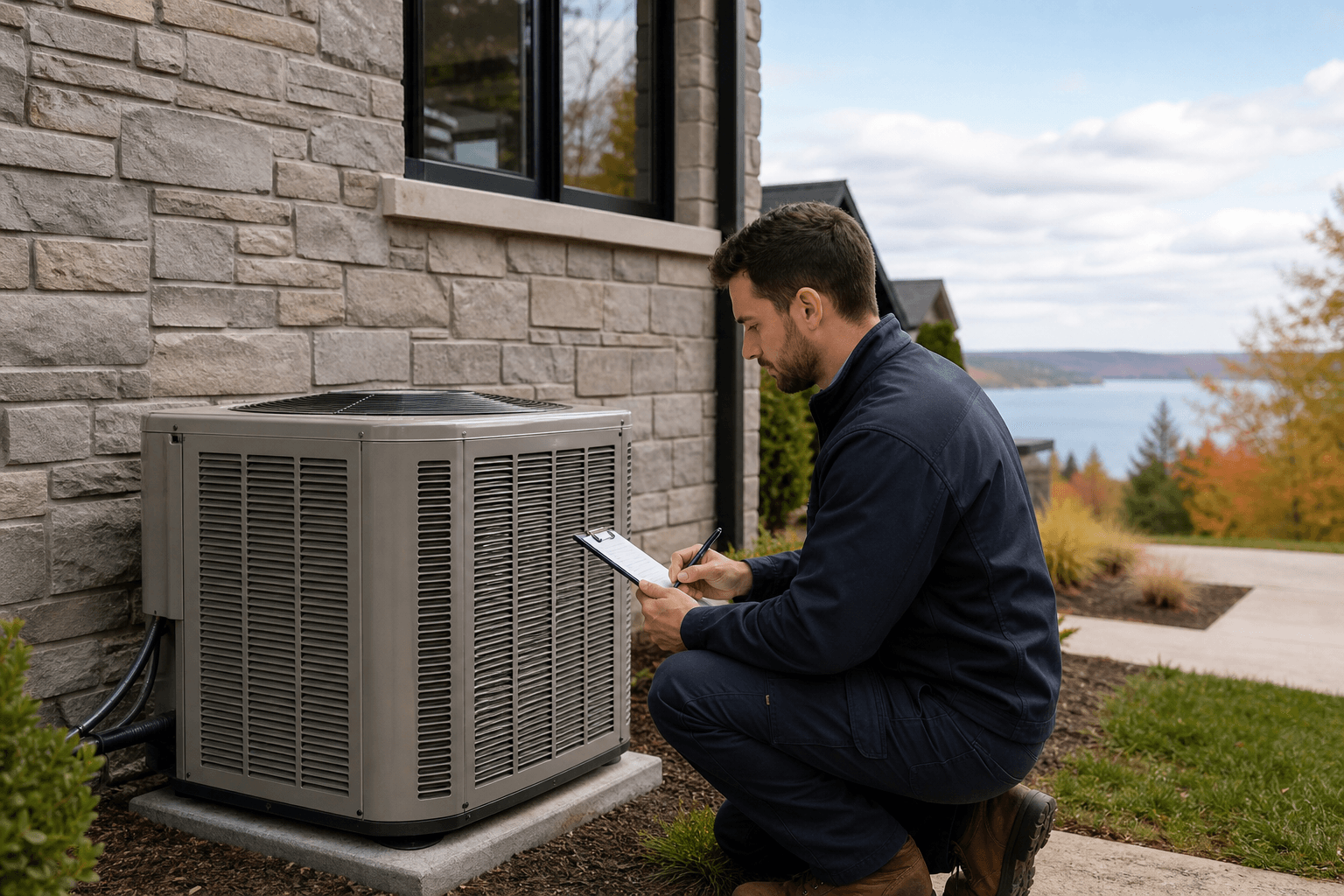

Seven HVAC evaluations every Ontario homeowner should use
How to use this checklist

This checklist is for Ontario homeowners who have a quote, a recommendation, or a system that is acting up and who need an evidence-based way to decide whether to get a deeper HVAC evaluation. An "evaluation" here means a focused inspection beyond a checklist home inspection: a technician documents system condition, measures key performance indicators, and reports what is required now versus what is optional. A dedicated HVAC inspection is a different service from a general home inspection and commonly costs more in Ontario because it goes deeper; see a market guide for context and typical price ranges (Get a Better Quote guide).
Below are seven decision-focused evaluations you can request or use to trigger a second opinion. Use them to compare proposals, spot missing scope, and reduce the risk of an unnecessary replacement.
-
1. Replacement justification: verify age, repair history and documented failure modes
Reason to run this evaluation: a contractor recommends full replacement. Before you accept a replacement, ask for documented evidence that replacement is genuinely needed. A proper assessment will record the unit's manufacture date, last service history, and the specific failure mode. Replacements are reasonable when equipment is at end of life and showing repeated failures, unsafe operation, or irreparable core damage. Replacing a working unit for marginal efficiency gains is an optional upgrade and should be presented as such.
What to expect from the evaluator: visual inspection, combustion safety checks for gas appliances, basic component testing, and a written summary showing whether the failure is isolated, recurring, or systemic. If the report cites age alone, request recent service records and an estimated remaining useful life so you can compare options objectively.
-
2. Persistent performance problems or rising energy bills
Reason to run this evaluation: the home has new hot or cold spots, longer run times, or rising utility bills that are not explained by lifestyle or weather. An evaluator should measure run times, airflow, and simple efficiency indicators to diagnose whether the issue is controls related, mechanical, or distribution related.
What to expect from the evaluator: measurement of runtime and duty cycle, checks of thermostat calibration and controls, airflow sampling at supply registers, and a short report that links symptoms to probable causes. This helps avoid paying for replacement when the real problem is a dirty coil, a misconfigured control, or a poorly balanced distribution system.
-
3. Suspected oversizing, short cycling or poor airflow
Reason to run this evaluation: installers or proposals rely on rule-of-thumb sizing, or the system cycles rapidly and rooms never reach setpoint. Oversized equipment can increase wear, reduce dehumidification, and raise operating costs. A correct diagnosis requires measured cycle length, static pressure and a review of the load calculation rather than a quoted nominal capacity alone.
What to expect from the evaluator: verification of on/off cycle duration, static pressure measurements, supply and return flow checks, and a written commentary on whether a load calculation was performed and whether ductwork or controls need modification. If the report shows the system is oversized or duct losses are high, compare corrective scopes rather than jumping to full replacement.
-
4. Vague or incomplete quotes: the written-scope checklist
Reason to run this evaluation: a written proposal omits critical details. Use an evaluator when two or more of these items are missing from a quote: exact equipment model and efficiency rating, a load-sizing justification, a clear description of ductwork changes, warranty coverage, rebate eligibility, and a labour versus materials breakdown. Missing items make fair comparison impossible.
What to expect from the evaluator: a gap analysis that lists what the original quote lacks, reasonable alternatives for missing scope, and sample questions you should ask the installer. An evaluator will also estimate reasonable allowances for typical retrofit tasks so you can compare apples to apples when you receive competing bids.
- Ask installers for model numbers and AFUE, SEER or HSPF ratings for heating and cooling equipment.
- Request a copy of the load calculation used to size equipment.
- Confirm whether ductwork or airflow work is included and whether permits are the homeowner's responsibility.
-
5. Considering a heat pump: suitability and realistic winter performance
Reason to run this evaluation: you are quoted a heat pump or thinking of switching from fossil heating. In Ontario’s four-season climate, a heat pump assessment must include an insulation review, distribution adequacy, available electrical service, expected cold-climate performance, and whether a hybrid strategy or backup heat source is required. A properly written evaluation avoids overpromising about winter performance and gives a realistic plan for backup heating when needed.
What to expect from the evaluator: a site-specific suitability review, explanation of expected seasonal performance, and integration options such as staged or hybrid systems. SO HVAC provides independent guidance on heat pump suitability tailored to Ontario homes and climate realities; see their overview for how they separate evaluation from sales (SO HVAC).
-
6. Water systems and water-quality measures: tank, tankless, softeners and RO
Reason to run this evaluation: quotes for hot water or water-quality work, such as tankless hot water units, water softeners or reverse osmosis systems. A clear plain-language evaluation should inspect household demand profile, piping condition, scale risk and water hardness so trade-offs between tank and tankless systems are understood.
What to expect from the evaluator: measurement or estimation of daily hot water usage, inspection of inlet piping and recirculation systems, and a written comparison showing lifecycle considerations and maintenance requirements for each option. This prevents replacing a conventional tank with a tankless unit that is undersized for your household or accepting an unnecessary whole-home softener when targeted point-of-use treatment is sufficient.
-
7. Pre retrofit assessments for efficiency upgrades or staged work
Reason to run this evaluation: you plan a staged efficiency retrofit or have limited budget for improvements. A structured pre retrofit assessment documents the existing system and prioritizes measures that match your energy and comfort goals so later upgrades are effective. This approach is recommended in retrofit guidance because it reduces wasted or mismatched upgrades and helps you compare contractor scopes objectively (BASC pre-retrofit assessment).
What to expect from the evaluator: baseline documented condition, a prioritized list of measures and expected outcomes, and an implementation roadmap that allows staged work without locking you into costly or incompatible measures. Use this assessment to make a plan rather than to accept a single contractor’s full replacement narrative.
What to expect from a proper evaluation and one low-effort next step

A thorough evaluation will deliver a short written report with three essentials: documented findings, a clear statement of what is required now versus optional upgrades, and at least two practical next steps with estimated cost ranges or allowance figures. If the evaluator cannot provide documented measurements for the main issues you brought up, ask for clarification before proceeding.
If you have received a quote you want checked, or a contractor is recommending replacement and you want an independent, no-pressure opinion, SO HVAC offers a free second opinion service that focuses on evaluation-first guidance for heating, cooling and home water systems. Their model separates assessment from sales so you can compare quotes confidently and make an informed decision without sales pressure. Learn more and book an independent review through the SO HVAC site (SO HVAC).
Frequently asked questions
Is SO HVAC’s free second opinion really free and without obligation?
Yes. SO HVAC describes its second-opinion service as free and provided without sales pressure. The intent is to evaluate and explain options so homeowners can decide, not to force an immediate sale. See the company site for the service description and how the evaluation-first model works (SO HVAC).
How much does a dedicated HVAC evaluation typically cost in Ontario?
A dedicated HVAC inspection that goes beyond a general home inspection commonly costs more than a basic home inspection in Ontario. Industry resources note that dedicated HVAC inspections in Ontario often range from roughly $350 to $650 depending on depth and travel; that difference exists because a dedicated evaluation documents measurements and provides a focused mechanical assessment (Get a Better Quote guide).
What is the difference between a standard home inspection and a dedicated HVAC evaluation?
A standard home inspection typically treats HVAC as a brief checklist item and does not include the diagnostic measurements or load calculations a homeowner needs to decide on replacements or retrofits. A dedicated HVAC evaluation records run times, airflow or static pressure readings, equipment condition, and prioritizes fixes versus replacements. For buyers and homeowners, a dedicated evaluation is the correct tool when HVAC condition is a central decision factor (Get a Better Quote guide).
How do I compare two contractor quotes fairly after an evaluation?
Compare quoted scopes line by line. Confirm model numbers and efficiencies, check for a load calculation, and ensure ductwork or airflow work is explicitly listed. Use an independent evaluator's gap analysis to translate vague items into comparable line items. If warranties, rebate handling, or permit responsibilities differ between quotes, account for those differences in your decision.
Are heat pumps a practical choice for every Ontario house?
Heat pumps work well in many Ontario homes, but suitability depends on building envelope quality, distribution system, and whether you accept a hybrid strategy for extreme cold. A site-specific assessment should review insulation, electrical service, and heating distribution before recommending a full heat pump conversion. Independent guidance can help you understand realistic seasonal performance for your home (SO HVAC).
If you want a low-effort next step, book a free, no-pressure second opinion from SO HVAC to have an independent evaluator review your quote or system and provide a plain-language report you can use to compare offers and decide with confidence. Visit SO HVAC to request a second opinion and learn more: SO HVAC.