

How to Plan Heat Pump Advice in Ontario?
Planning heat pump advice in Ontario starts before you compare equipment or sign an installation quote. The useful question is not simply which model looks best. It is whether the proposed system fits your home, heating and cooling needs, existing equipment, electrical setup, and budget priorities.
An electric heat pump can provide both heating and cooling because it is reversible. Natural Resources Canada explains that heat pumps can serve homes in winter and summer, but also notes that the range of system types and options can make it difficult to determine whether one is right for a particular home. You can review its overview of heat pump basics before speaking with a contractor.
Use the ordered process below to organize your information, test the recommendation, and identify when to pause. These steps are for planning and comparison, not for performing electrical, refrigerant, structural, or other technical work yourself.
Step 1: Define the home comfort problem
Begin with the reason you are considering a heat pump. A replacement may be prompted by an aging furnace, an air conditioner that is not meeting expectations, uneven temperatures, a renovation, or a desire to combine heating and cooling in one system. Write down the actual problem in plain language before discussing a solution.
Record what you know about the home and current equipment:
- The type of heating and cooling equipment currently installed.
- Which rooms feel uncomfortable and under what conditions.
- Whether the concern is heating, cooling, airflow, noise, controls, or reliability.
- Any recent repairs, service notes, or recommendations.
- Whether the project is a replacement, an addition, or part of a larger renovation.
Gather photographs of equipment labels, thermostats, electrical panels, indoor units, and outdoor areas if you are requesting an initial discussion. Keep copies of any written quote or diagnosis. A clear record helps separate the underlying issue from the proposed remedy.
Stop point: Do not approve a heat pump solely because someone says your existing system is old or unsuitable. Ask what was inspected, what evidence supports replacement, and whether repair, maintenance, or a different configuration was considered. If the explanation does not address the original comfort problem, pause before moving to equipment selection.
Step 2: Check the home and existing system
Heat pump planning should be based on the home rather than a product name alone. Ask the contractor to explain how the proposal accounts for the building layout, insulation and air-sealing conditions, ductwork or distribution method, windows, thermostat location, and the condition of equipment that may remain in service.
For a ducted proposal, ask whether the existing duct system was assessed and how the proposed equipment will connect to it. For a ductless proposal, ask which rooms will receive indoor units and how areas without a unit will be served. If a furnace or other heating system is staying as part of the plan, ask how the systems are expected to work together and who controls the changeover.
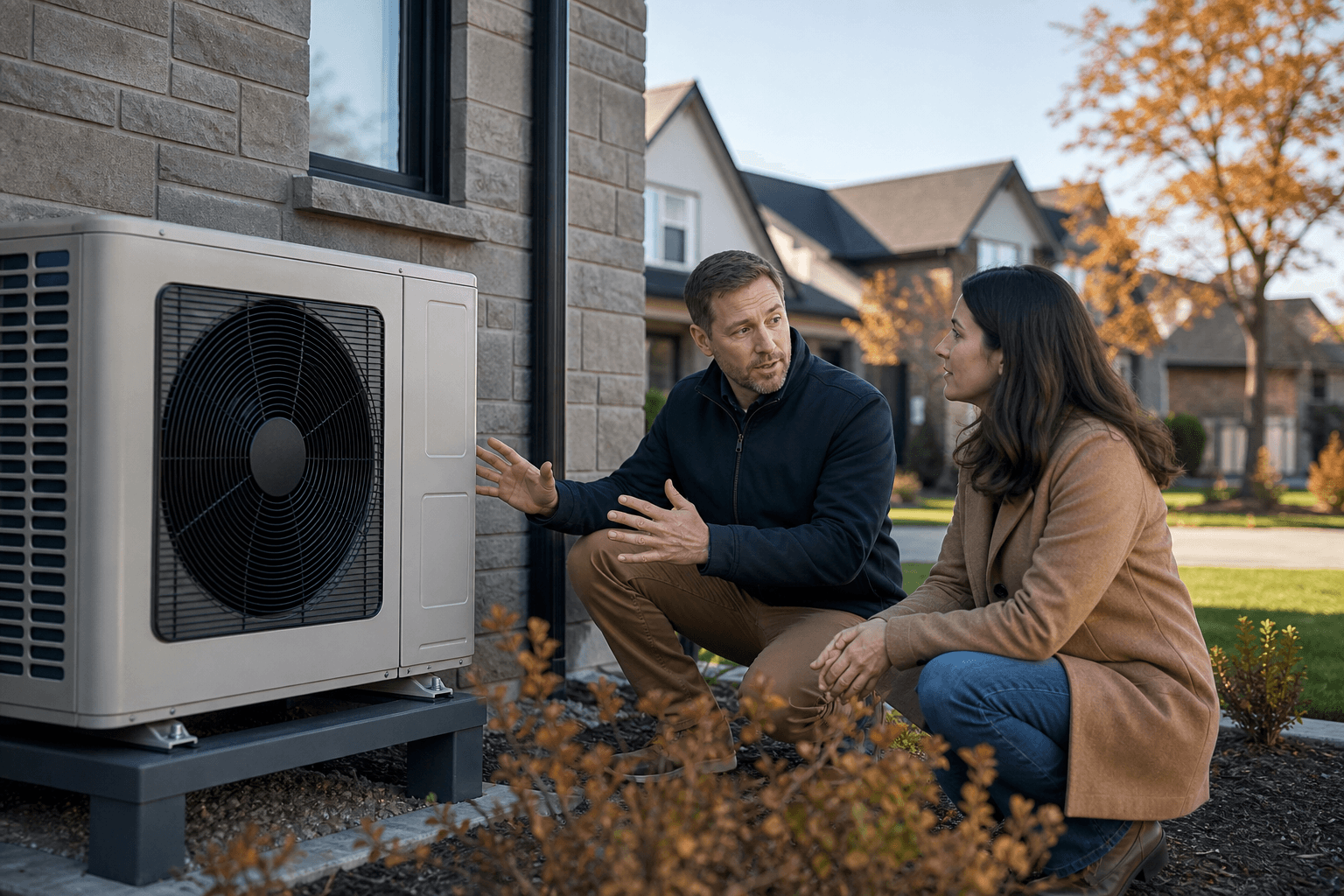
Also ask about the outdoor installation location. The proposal should identify where the unit will sit, how access for service will be maintained, and whether the location creates concerns involving drainage, snow, noise, neighbouring property, or the building itself. These are site-specific questions; the installer should inspect the proposed location rather than relying on a generic assumption.
Natural Resources Canada states that a contractor should design, install, and service equipment to meet the requirements of the home, while complying with applicable local requirements. Its heat pump transition pamphlet also warns of risks associated with improper sizing or installation by a non-certified contractor.
Stop point: Pause if the recommendation is made without a home assessment, without discussing the existing system, or without identifying the proposed indoor and outdoor locations. Do not attempt to move, wire, open, charge, or modify heat pump equipment yourself. Technical work should remain with an appropriately qualified professional.
Step 3: Ask for a complete design explanation

Once the home has been assessed, request a written explanation of the proposed design. You do not need to evaluate every technical specification alone, but you should be able to understand what the system is intended to do and what assumptions the design uses.
Ask the contractor to address these points:
- What heating and cooling loads were considered for the home?
- How was the equipment capacity selected?
- What indoor comfort areas does the design cover?
- What existing equipment will be removed, retained, or changed?
- What electrical work, controls, drainage, mounting, or duct modifications are included?
- What maintenance access is required for the indoor and outdoor components?
- What assumptions could change the recommendation or installation scope?
Be careful with broad claims about performance. Ask which results are documented for the exact proposed system and which are general expectations. Ask how the system is intended to operate during the conditions that matter most in your household, rather than accepting a vague statement that one product works for every home.
Natural Resources Canada describes heat pumps as a proven technology in Canada and says they can provide year-round comfort control, while also emphasizing that system types and options vary. That distinction matters: the technology category may be suitable, but the design still needs to be matched to your house and priorities. Read the agency’s heating and cooling information and use it to prepare questions, not to replace a site-specific assessment.
Stop point: Do not proceed when the contractor cannot explain the design in terms you can follow, or when the proposal gives a product label without installation scope. Ask for the missing information in writing. If the answer remains unclear, obtain another independent assessment before committing.
Step 4: Compare quotes by scope
Comparing heat pump quotes in Ontario is more useful when you compare what each proposal includes, not only the equipment price. Put the proposals beside one another and mark differences in design, labour, electrical work, controls, removal, commissioning, documentation, and follow-up service.
A quote should make it possible to ask:
- Is the equipment model and configuration clearly identified?
- Is the installation method described?
- Are required modifications listed separately from optional additions?
- Are exclusions stated, including work another trade may need to complete?
- Does the proposal explain what happens to existing heating or cooling equipment?
- Are warranty responsibilities and service contacts written down?
- Are payment terms, cancellation terms, and any financing language clear?
Keep “required,” “recommended,” and “optional” in separate columns. This prevents an accessory or upgrade from being presented as though it were necessary for the basic installation. If two quotes differ significantly, ask each contractor to explain the difference rather than assuming the lower or higher figure tells the whole story.
Ontario’s official energy-choice information says that the Home Renovation Savings Program offers funding for eligible measures including heat pumps, with program details and eligibility applying to the offering. Before using a rebate or incentive in your calculation, check the current requirements directly on the Ontario government energy choices page. Do not treat a rebate as confirmed until you have verified that the homeowner, property, product, and installation meet the current rules.
Stop point: Stop the comparison if a quote relies on a rebate, warranty, savings estimate, or deadline that is not explained in current written information. Also pause if important work is described only as “standard” or “included” without a clear scope.
Step 5: Make a verification and safety plan

Before signing, create a short list of facts that must be confirmed. The list should include the final equipment configuration, the sizing rationale, the installation scope, the treatment of existing equipment, the electrical and control requirements, and the person responsible for service questions after installation.
Ask for the installer’s qualifications and confirm who will perform the technical work. The Natural Resources Canada pamphlet identifies improper sizing and installation as risks and directs homeowners toward a contractor able to design, install, and service equipment for the home. That is a reason to verify qualifications and references through reliable sources, not a reason to accept pressure or an unsupported guarantee.
Set practical safety boundaries for the project:
- Do not remove panels or work on electrical connections unless you are the qualified professional assigned to do so.
- Do not handle refrigerant circuits or attempt to alter charge, piping, or controls.
- Do not obstruct the outdoor unit or make site changes without discussing them with the installer.
- Do not rely on an online calculator or a sales claim as a substitute for a home assessment.
- Do not sign while essential details remain verbal, unclear, or contradictory.
If a quote or inspection identifies an urgent safety concern, follow the contractor’s safety instructions and seek qualified service. This article cannot diagnose a fault or determine whether a particular installation is safe. A written plan, a clear scope, and a professional assessment are the appropriate limits for homeowner decision-making.
Stop point: If you cannot explain what you are buying, what remains in place, what work is included, and who is accountable for the installation, stop. The next step is clarification or another assessment—not a rushed signature.
Heat Pump Advice Ontario FAQ
Can a heat pump provide both heating and cooling in an Ontario home?
Yes, an electric heat pump is a reversible heating and cooling system. Natural Resources Canada explains that it can heat and cool a home, but suitability depends on the home and the system options being considered. Ask for advice based on your property, existing equipment, and comfort requirements rather than assuming every configuration will perform the same way.
Should an Ontario homeowner replace a furnace immediately with a heat pump?
Not automatically. First identify the problem, confirm whether the current equipment was properly assessed, and ask whether repair, maintenance, replacement, or a combined arrangement was considered. A heat pump recommendation should explain the design and installation scope for your home. If the recommendation is based only on age, urgency, or a product label, pause and request a fuller assessment.
What should be included in a heat pump quote?
The quote should identify the equipment and configuration, installation method, indoor and outdoor work, electrical or control changes, removal or retention of existing equipment, required versus optional items, exclusions, warranty responsibilities, and payment terms. It should also state assumptions that could change the scope. Without those details, comparing quotes can produce a misleading result.
Can homeowners install or modify a heat pump themselves?
Homeowners should not perform electrical, refrigerant, control, or other technical installation work as a do-it-yourself project. Natural Resources Canada warns about risks associated with improper sizing or installation by a non-certified contractor. Use a qualified professional for assessment, design, installation, and service, and stop if a proposal does not make clear who will perform that work.
Talk with SO HVAC
Contact SO HVAC to ask about the next step and confirm which options fit your needs.