
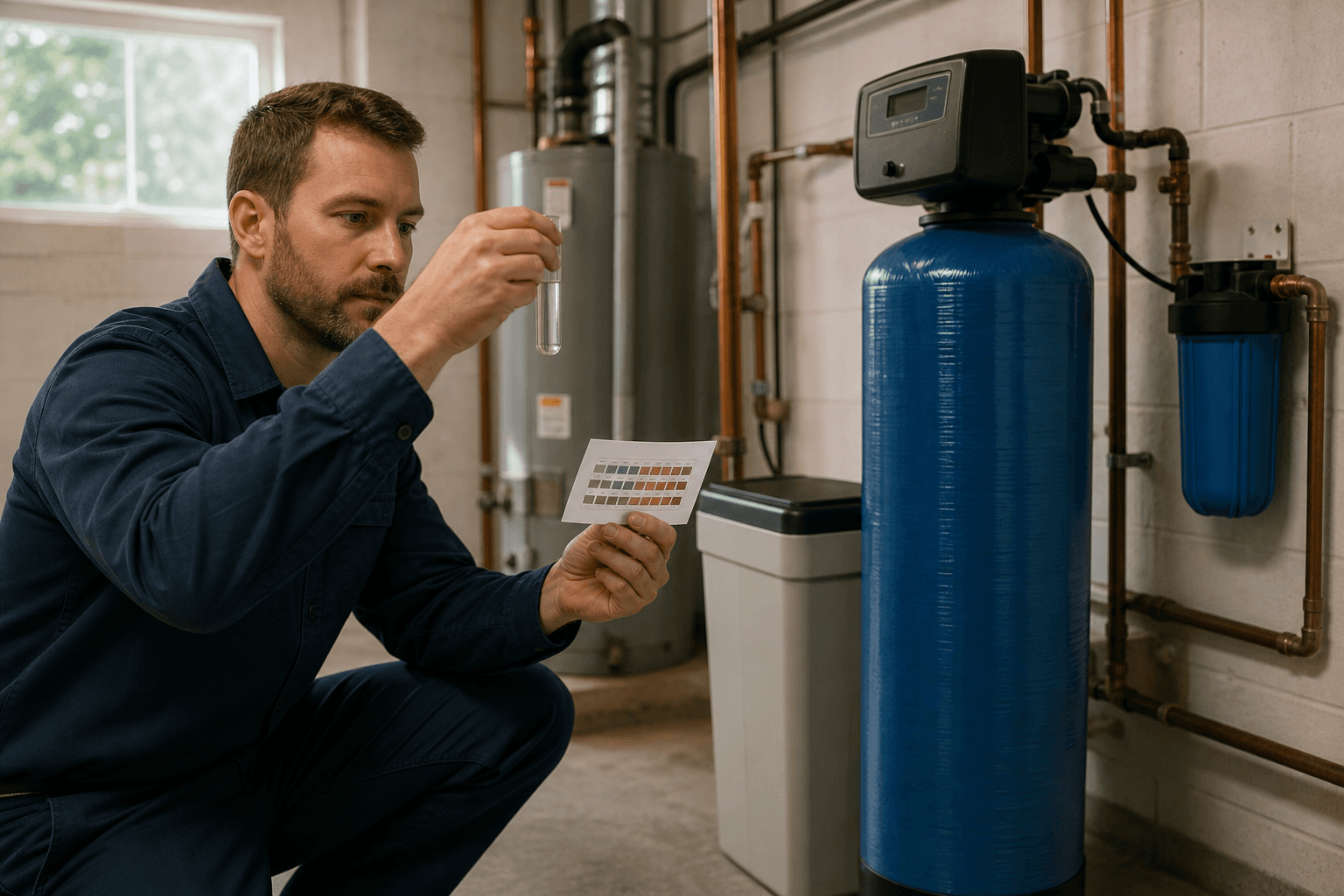

Burlington water softener guide for testing and local considerations
This short, practical guide explains what a water softener does, why testing your water first matters in Burlington, the problems a softener will and will not solve, common system approaches and their trade-offs, and the questions you should bring to installers or to a no-pressure second opinion.
What a water softener does and why it matters in Burlington
A water softener is a whole-house treatment device that reduces dissolved hardness minerals, mainly calcium and magnesium, which cause scale buildup. The most common systems use ion-exchange resin to replace hardness ions with sodium or potassium ions so water no longer leaves hard mineral deposits on pipes, fixtures and heating elements.
How ion-exchange softeners work
Salt-based ion-exchange softeners hold resin beads that attract calcium and magnesium. Over time the resin becomes saturated and the system regenerates using a salt brine. Regeneration restores softening capacity so the system continues to prevent scale.
Everyday signs you might have hard water
- White scale or crust on faucets, showerheads and inside kettles
- Shortened lifetime or reduced efficiency of water heaters and tankless systems
- Soap or shampoo that does not lather well and leaves residue on skin or dishes
- Spotting on glassware and buildup in appliances such as dishwashers
Why local testing matters first and which tests to run
Hardness varies across Ontario and can be very different even between nearby neighbourhoods. The single most important step is to test your water before buying any treatment. Local testing prevents unnecessary purchases and ensures you choose the correct system for your actual water chemistry. For a detailed explanation of regional differences and system selection in Ontario, see the WaterSmart guide on choosing the best water softener for Ontario homes.
Hardness test: what to look for
Ask for hardness reported in mg/L or parts per million and request a copy of the laboratory report. A professional test shows the concentration of calcium and magnesium so an installer can size a system by capacity rather than guesswork. Lab results also include pH and total dissolved solids, which influence the choice and long-term performance of treatment systems.
Iron and manganese: when they need separate treatment
If your water test shows measurable iron or manganese, softening alone often will not be enough. Iron can foul softener resin and leave staining. Dedicated iron removal filters or combination systems are appropriate when iron or manganese appear at higher levels, so include iron testing as part of your initial lab work.
Bacterial testing for wells
If your home uses a private well, bacterial contamination is a separate concern that a softener does not address. Follow Public Health Ontario guidance for private well testing and safety. For a plain-language overview of home water testing priorities in Ontario, see the Get a Better Quote overview of home water treatment in Ontario.
What a softener will and will not fix

Before you sign any proposal, separate scale prevention benefits from issues that need other equipment. Treat each problem with the right technology to avoid overpaying for unnecessary components.
Issues solved by softening
- Scale prevention on pipes, fixtures and heating elements
- Improved soap performance and easier cleaning
- Reduced spotting on glass and dishware
- Longer service life and better efficiency for appliances affected by scaling
Problems that require different treatment
- Iron staining and iron fouling: often require iron-specific filters or combination systems
- Bacterial contamination: requires disinfection such as UV treatment or chlorination before any softener
- Cloudy or sediment-laden water: prefiltration or sediment filters are needed
- Chlorine taste and odour or organic contaminants: activated carbon or reverse osmosis for drinking water may be appropriate
Common softener approaches and the trade-offs to consider
Installers will typically quote one of several approaches. Each has strengths and limitations. Match the technology to your water test results, household habits and local disposal rules.
Salt-based ion exchange: pros and cons
Pros: proven performance for preventing scale, predictable sizing by grain capacity, and compatibility with a wide range of household demands. Cons: requires salt or potassium refills, periodic regeneration cycles, and produces a concentrated brine discharge that some municipal wastewater or septic systems restrict. If sodium is a health concern in your household, ask about potassium chloride as an alternative and confirm any extra cost and availability.
Salt-free conditioners and electronic descalers
These options do not remove hardness ions. Instead they attempt to reduce scale formation by altering mineral crystal behaviour. They can help with minor scaling issues and avoid salt use, but they do not provide the same protection as ion exchange where hardness is high. For homes with moderate hardness or where salt discharge is a concern, these options may be worth discussing, but ask for independent performance data for your specific hardness level.
Whole-house versus point-of-use decisions
Most homeowners choose a point-of-entry, whole-house softener to protect all plumbing and appliances. In some cases, a point-of-use system such as a reverse osmosis unit under the kitchen sink is paired with a softer compromise or no whole-house softener to protect drinking water quality while avoiding whole-house salt use. Size, flow requirements, and whether you want softened water for outdoor use are all planning factors.
Maintenance expectations, salt use and operating costs to plan for

Understanding ongoing tasks helps you budget and compare quotes realistically. Installers should explain average salt use, regeneration frequency and recommended professional service intervals based on your household size and measured hardness.
How often will you add salt
Salt consumption depends on system capacity, household water use and hardness. A typical household might refill a brine tank every few weeks to a few months. Ask the installer to estimate monthly salt use based on your test results and household occupancy so you can budget for this recurring cost and compare proposals fairly.
Signs your system needs service
- Noticeable return of scale or spotting
- Softener cycles that fail to regenerate or unusually frequent regeneration
- Salt bridging in the brine tank or visible resin fouling
- Unusual tastes or odours in softened drinking water when combined with other systems
Service checks an installer should perform
- Verify regeneration settings and inspect control valve operation
- Check salt level and brine tank condition
- Test outlet water hardness after service to confirm performance
- Inspect for iron or manganese fouling and recommend corrective action if present
Plan for at least an annual professional inspection and a simple homeowner check of salt level every month or two, depending on use.
Questions to ask before you buy or compare quotes
Use this checklist when you receive a proposal. A good quote is specific, based on measured water tests and uses clear, comparable terms.
Minimum information every good quote should include
- Which water tests were used to size the system and a copy of the lab report
- System capacity stated in grains and estimated regeneration frequency
- Expected salt or potassium use per month based on your household size
- Warranty details for the control valve, tank and resin, and what is excluded
- Flow rate and whether the system meets peak demand for showers and appliances
- Drain location and whether your municipal or septic rules allow the planned brine discharge
- Whether post-install testing of outlet hardness is included
Red flags to avoid in a proposal
- Pricing without reference to a water test or with only a generic recommendation
- Vague capacity language such as "suitable for a family" without grains or regeneration data
- No clear warranty or no scheduled service visit included
- Pressure to sign quickly or bundled add-ons you did not request
How to get a free, independent second opinion before committing
Before installing a system, bring your original quote, the lab water test results, and photos of the proposed install area to an independent evaluator. A second opinion helps you verify sizing, spot unnecessary equipment, and compare trade-offs without sales pressure. SO HVAC offers a free, no-obligation second opinion on water and HVAC systems that evaluates what is required versus optional and explains the real trade-offs in plain language; learn more on the SO HVAC site.
What an independent review will cover
- Whether the quoted system matches your tested water chemistry
- Appropriateness of capacity and estimated salt use
- Whether prefiltration, iron removal or disinfection should be added first
- Installation concerns such as drain routing, access for service, and warranty handling
What to expect after the evaluation
You should receive a clear explanation of what is necessary now, which upgrades are optional and why, and a comparison you can use when reviewing competing quotes. The goal is confidence, not pressure.
Frequently asked questions
Do I need a water softener if I have municipal water in Burlington
Not always. Municipal systems can still deliver hard water in many neighbourhoods. Test first to see whether hardness levels are high enough to justify a whole-house softener. The WaterSmart guide outlines why local variation matters across Ontario and why you should not assume uniform hardness.
Will a water softener remove iron or bacteria from my well water
A standard salt-based softener is not a reliable method for disinfection and may not remove all forms of iron. Test first and treat iron and bacteria with the appropriate technology, such as an iron filter or UV system, before or alongside a softener. Follow local public health guidance for private wells.
How often will a typical softener need salt and who should replenish it
Salt top-up frequency varies with system size, household water use and hardness. Many households add salt every few weeks to months. You can top up the tank yourself, or arrange a service plan for periodic refills and maintenance with a reputable installer.
Is softened water safe to drink and are there health concerns
Softened water replaces hardness minerals with sodium or potassium. For most people the change is not a health risk, but individuals on strict sodium-restricted diets should consult their health provider and consider point-of-use drinking water options such as reverse osmosis. Discuss drinking water preferences with your installer so the solution matches your household needs.
What should I bring when I book a second opinion on a water softener
Bring your original installer quote or proposal, the lab water test results, and photos of the mechanical room or proposed install location. These items let an independent reviewer assess whether the recommendation is correctly sized and whether any required prefiltration or alternative treatment is missing.
If you would like an independent, no-sales-pressure review of a proposed water softener or water treatment plan, book a free second opinion with SO HVAC to compare options with plain-language advice tailored to your Burlington home.
Further reading: How to choose the best softener for Ontario homes at WaterSmart, and an overview of home water treatment in Ontario at Get a Better Quote.