
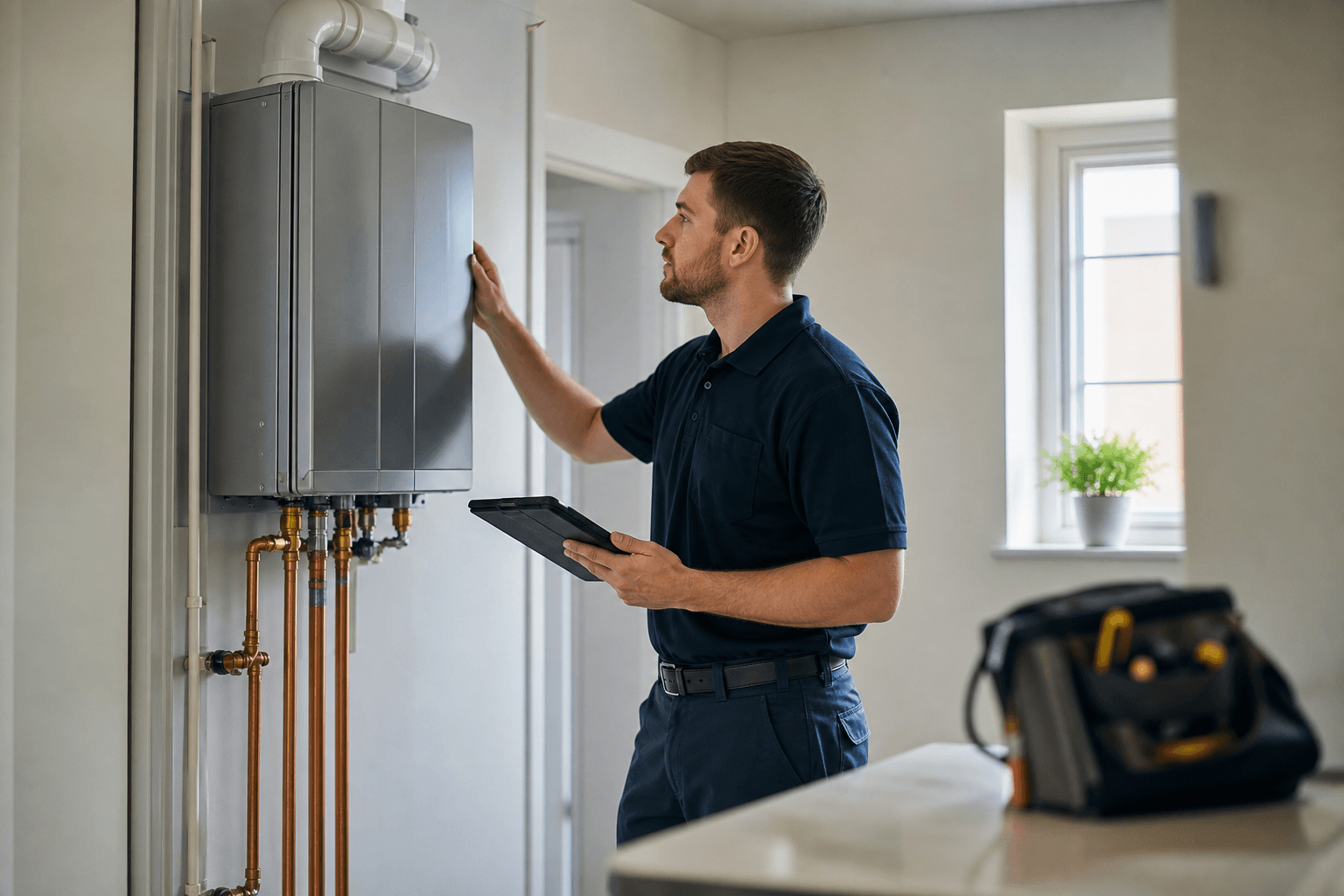

How to prepare for a Brampton tankless evaluation
If you plan to install or replace a tankless water heater in Brampton, a good on-site evaluation will decide whether tankless is suitable, which model will work reliably in our four-season climate, and what installation work is actually required. This guide walks you through exactly what to prepare before the visit, the step-by-step tests an evaluator should perform, the questions to ask on-site, common warning signs, and how to compare local quotes. If you want an independent, no-sales-pressure review after the visit, SO HVAC offers a free second opinion in Brampton that explains required versus optional work plainly on our website.
What a Brampton tankless evaluation is and why it matters
An on-site tankless evaluation is a focused inspection and a set of measurements. A qualified evaluator inspects the existing water heater and piping, measures flow rates at typical fixtures, records inlet and outlet water temperatures, checks fuel and venting capacity, and assesses water quality and location constraints. Because tankless units depend on matching flow rate and temperature rise to household demand, the site visit avoids guessing and prevents oversize or undersize recommendations that can cost you later. For Canadian homeowners, cold-weather performance and correct sizing are particularly important, so the evaluator must account for lower incoming water temperatures when choosing models.
Before the visit: homeowner checklist to speed the evaluation
Gathering a few documents and photos ahead of time saves the evaluator on-site time and improves accuracy. Prepare these items and make them available by email or printed file:
- Photos: current water heater, surrounding space, venting path, gas meter, and any visible labels on the unit.
- Make and model of the existing water heater, if available, and any recent service records.
- Recent quotes or proposals from other installers, plus any scope documents to compare later.
- Fixture count and typical simultaneous use: number of bathrooms, shower heads, dishwasher, washing machine, and whether multiple showers run at once.
- Utility details: natural gas or propane supply, electrical panel access, and approximate age of plumbing in the house.
- Access notes: tight closets, attic or crawlspace access, and how far the unit would be from exterior vents.
- Any known water quality issues such as hard water or sediment, or recent water tests if you have them.
Having recent quotes from local providers available helps the evaluator confirm assumptions and reduces follow-up calls. Many Brampton installers include similar site checks as part of their service offering, so being ready with documentation lets the visit focus on measurements and analysis.
Step-by-step: what the evaluator will measure and test on-site

A thorough evaluation follows a clear order so nothing is missed. Expect the evaluator to do these steps and to explain the outcome in plain language.
- Visual inspection and label capture. The evaluator photographs the existing heater, checks clearances, and records model and serial where visible.
- Fixture flow profile. The evaluator measures flow at representative fixtures, usually by timing a bucket or using a flow meter, to understand how many litres per minute you use when devices run simultaneously.
- Inlet and outlet temperature readings. Using thermometers, they record incoming cold-water temperature and the hot-water set point to calculate the required temperature rise for sizing purposes.
- Temperature rise and model matching. They use the measured flow and temperature rise to identify tankless models that meet demand. Installers commonly match manufacturers’ performance charts and model selectors to pick units rated at the calculated rise.
- Fuel and gas line assessment. For gas units the evaluator checks pipe size, run length, and meter capacity to see if an upgrade is necessary.
- Venting and location constraints. The evaluator confirms venting options and whether the proposed unit can be safely vented from the planned location.
- Electrical, condensate and clearance checks. For condensing units, condensate routing and suitable drains are verified. Electrical supply is checked for electric or hybrid models.
- Water quality check. The evaluator looks for scale, sediment, or hard-water indicators that affect maintenance and warranty considerations.
On-site checks explained: flow rate, temperature rise, fuel and venting, water quality and location constraints
- Flow rate, measured in litres per minute, determines how many fixtures can be run simultaneously without dropping temperature.
- Temperature rise is the difference between incoming cold water and the desired delivered temperature. Sizing depends on matching model GPM or LPM ratings at the calculated temperature rise, which is why inlet temperature matters more in Canada than in warmer climates.
- Gas line capacity or propane supply must be sufficient for the selected unit. If the evaluator proposes a larger unit, ask for documented pipe sizing and meter capacity checks.
- Venting options affect labour and materials. A straight, short vent run is simpler and less expensive than long, offset routes or special materials for high-efficiency condensing units.
- Water quality matters for longevity. Hard water increases maintenance needs and may affect warranty terms, so expect the evaluator to note softening or regular descaling needs.
Questions to ask the evaluator and what good answers look like
Bring these precise questions to the visit and ask the evaluator to show the calculations or photos when relevant.
- How did you measure my hot water demand? Good answer: shows flow measurements and a simple simultaneous-use sketch, not guesswork.
- What temperature rise did you use and why? Good answer: cites measured inlet temperature and the target set point used to pick models.
- Which models meet my needs at the calculated flow and rise? Good answer: names specific models and compares their litres per minute at that temperature rise.
- Will gas, venting or electrical upgrades be required? Good answer: lists exact work, materials, and whether permits are needed.
- How will hard water affect this unit and my warranty? Good answer: explains maintenance intervals, recommended softening or filtration, and any warranty conditions tied to water quality.
- Can I get this proposal in writing with the math and scope? Good answer: yes, with photos and a clear line-item scope to compare quotes.
SO HVAC emphasises clear, plain-language explanations and separates evaluation from sales, so you should expect answers that help you compare quotes without pressure. Ask the evaluator to include photos and the raw numbers in the written report.
Common red flags during a tankless evaluation and when to pause the project
- No flow measurements or only a vague statement of household demand.
- Electric or gas upgrades are listed without documented checks on meter capacity or pipe sizing.
- Vague venting proposals with no sketch of routing or required materials.
- Pressure to sign immediately or a mandatory bundled upsell that cannot be separated from essential work.
- An oversized recommendation without explanation. Bigger is not always better for tankless systems.
- Missing notes about water hardness or maintenance, especially in systems that will scale quickly.
If you see these warning signs, pause and request a written explanation or an independent review. An impartial second opinion can confirm whether the proposed scope matches measured demand and local constraints.
How to compare Brampton tankless quotes fairly

When you receive competing proposals, compare them line by line. Use this checklist to keep comparisons fair and focused on performance, not only price.
- Equipment: brand, exact model, and rated litres per minute at the quoted temperature rise.
- Scope of work: gas piping, venting type and length, electrical, condensate management, and structural modifications.
- Labour: hours estimated, certified trades included, and who performs gas or electrical work.
- Permits and inspections: whether the quote includes municipal permits and final inspection fees.
- Removal and disposal of the old heater and any corrective plumbing work.
- Warranty: manufacturer warranty and whether labour warranty is included and for how long.
- Maintenance recommendations: frequency, cost, and whether a maintenance plan is offered.
Check that each quote lists the same assumptions for flow and temperature rise. If one quote lists a much larger model but does not document higher measured flow, ask for the math. Local installers often price similar line items differently, so the written scope and the sizing numbers are the deciding factors.
After the evaluation: realistic next steps and how to book a free Brampton second opinion
After the visit you should receive a written report that includes photos, flow numbers, inlet temperature, recommended models, and a clear scope of required installation work. Typical next steps are:
- Ask each contractor for a written quote matching the report and include the math used for sizing.
- Compare quotes using the checklist above and check warranty and maintenance commitments.
- If quotes differ significantly on model size, venting, or gas work, request clarification or an independent second opinion before you proceed.
- If you decide to proceed, confirm permit responsibility, a start date, and a firm written installation schedule.
If you want an independent, no-pressure second opinion in Brampton to review the on-site findings and quotes, SO HVAC provides free evaluations and follow-up explanations to help you decide. Learn more or request a second opinion on the SO HVAC website at the official website.
Frequently asked questions
Is a tankless water heater suitable for Brampton's cold winters?
Tankless units can work in Brampton, but sizing must account for lower incoming water temperatures. An evaluator will measure your inlet temperature and use that number to choose models rated for the required temperature rise.
What information should I send an evaluator before the visit?
Send photos of the existing heater, any service history, recent quotes, fixture counts, and note your typical simultaneous hot water use. This helps the evaluator use on-site time for measurements instead of basic fact gathering.
How do installers size a tankless unit and what numbers should I expect from the evaluation?
Installers combine measured flow rate and calculated temperature rise to pick models that meet your peak demand. Expect the evaluator to give you litres or gallons per minute at the measured temperature rise and to show which models meet those numbers.
When will an evaluator recommend repair instead of replacement for my water heater?
If the existing tank or components are sound and the problem is a specific failed part, an evaluator may recommend repair. Replacement is recommended when the unit is near end of life, has repeated failures, or cannot meet household demand even after repair.
How does SO HVAC's free second opinion work in Brampton and what does it include?
SO HVAC offers a free, no-obligation second opinion that reviews the on-site findings and quotes, clarifies required versus optional work, and explains trade-offs in plain language. The service separates evaluation from sales so you can compare quotes confidently. Details and booking are available on the SO HVAC website at the official website.
SO HVAC
Talk with SO HVAC
Contact SO HVAC to ask about the next step and confirm which options fit your needs.