

7 questions to ask before choosing Burlington winterize HVAC
Why these seven checks matter and when to book

If you are hiring someone to winterize your HVAC in Burlington, these seven questions are a short, practical checklist to use on the phone and at the site visit. They help you avoid vague scopes, unnecessary replacements, and missed safety checks while confirming climate-aware work for Ontario’s four-season weather. Burlington homeowners commonly follow a twice-yearly service rhythm, with a fall visit before cold weather and a spring visit before cooling season; local guidance supports this spring and fall cadence for seasonal maintenance.
-
1. What exactly does the contractor include when they say “winterize”?
Ask for a written scope before the technician arrives. A clear winterize checklist should itemize what will be inspected and serviced so you can compare offers line by line. Typical line items to request by name include:
- Thermostat operation and setpoint verification.
- Filter inspection and replacement recommendation with filter size noted.
- Combustion appliance visual checks and ignition tests for furnaces.
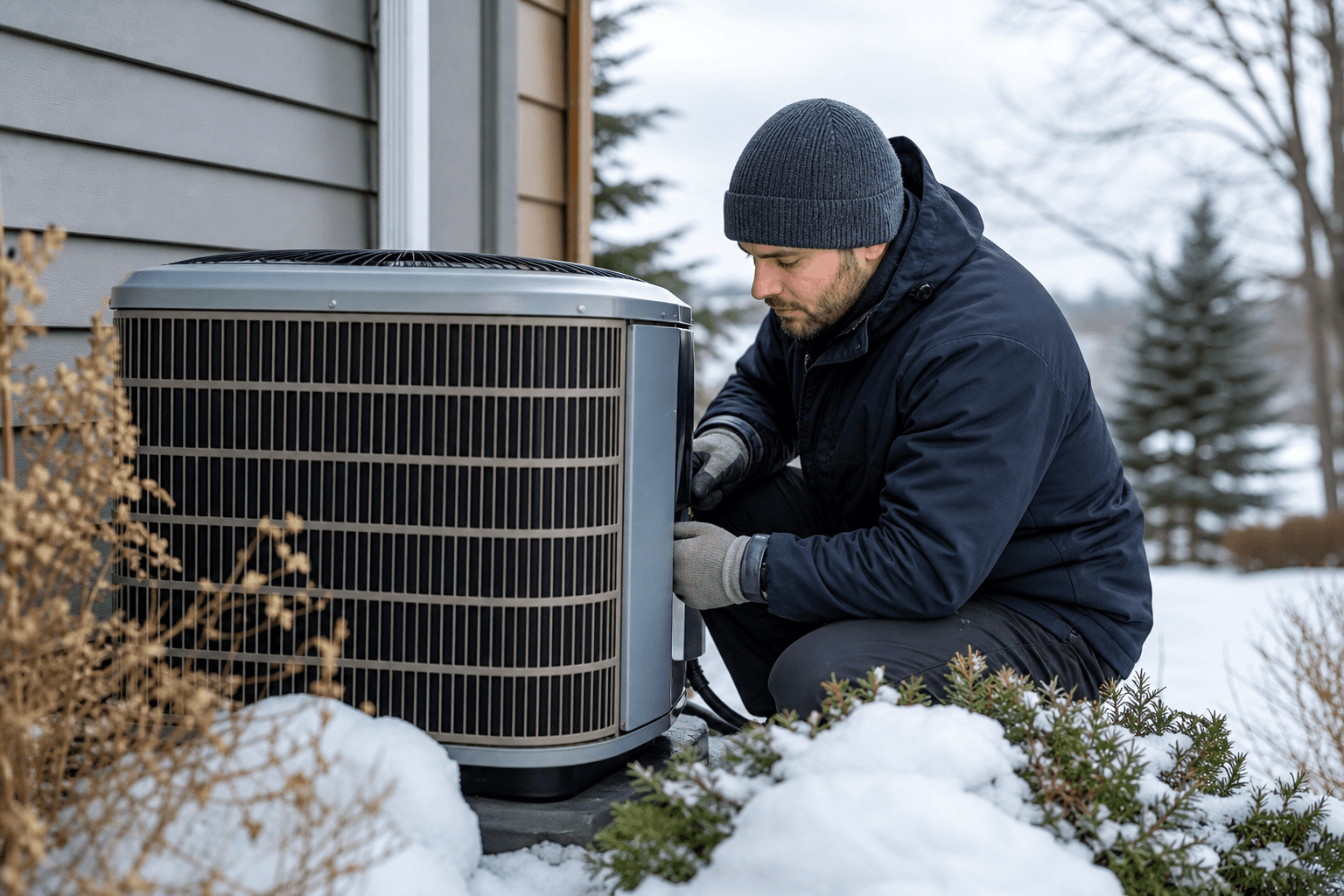
- Outdoor unit clearance, coil cleaning, and condensate drain checks for heat pumps and air conditioners.
- System run test under load and a short written summary or photos.
What to expect on the paperwork: an itemised checklist, any photos of issues, and a short next-steps list. Warning signs include vague promises such as “we’ll make it ready” with no details, or a refusal to provide an itemised scope in writing. Decision rule: accept only providers who will email or show you a written scope and deliver a short follow-up report after the visit. That paperwork is what lets you compare quotes fairly if a replacement or larger repair is suggested later.
-
2. Will they inspect combustion safety, the heat exchanger and test for carbon monoxide?
For homes with furnaces, documented safety checks are non-negotiable. Ask whether the contractor will visually inspect the heat exchanger and flue, verify venting integrity, and use a carbon monoxide monitor or combustion analyser as part of the winterize visit. If the appliance shows visible cracks or suspected combustion issues, the contractor should recommend shutting it down and arranging an independent safety inspection or replacement.
What a pass/fail looks like: a written safety note that records CO readings when taken, describes the heat exchanger condition, and lists immediate safety actions if required. Red flags include refusal to test, dismissing CO tools as unnecessary, or offering only verbal assurances. Decision rule: require documented safety checks or a clear referral for a separate safety inspection before you accept any comfort or efficiency work.
-
3. Do they measure airflow, duct performance and basic thermostat diagnostics?
Proper airflow matters for winter comfort, burner performance, and for heat pumps the risk of freezing or short cycling. On site, ask the technician to note return and supply register temperatures, the filter type and condition, and any visible duct leaks or disconnected sections. Simple temperature splits and register readings are easy to capture and very informative.
Why it matters: a system with poor airflow will run longer, cost more, and may not protect compressor or heat exchanger performance. Warning signs are technicians who swap a filter and leave without recording temperatures or explaining airflow observations, or those who propose expensive ductwork overhauls without simple baseline data. Decision rule: prefer contractors who document baseline temperatures or airflow observations and explain fixes in plain language so you can compare their findings to other quotes.
-
4. If replacement is suggested, did they base it on a load calculation and real data?
Replacement recommendations should be based on measurements and calculations, not a gut feeling. Ask whether the contractor completed a Manual J load calculation or used measured home data such as insulation levels, window area, and thermostat history, and whether they recorded existing system performance like airflow, temperature split and run times.
Why sizing matters: oversized equipment cycles frequently, wastes energy and shortens component life, while undersized equipment struggles in deep cold. Red flags include an immediate insistence on replacement without testing, or claims that one model size fits every home. Decision rule: require a documented load calculation or independent verification before approving replacement quotes, and ask that the calculation be included in the written proposal so you can verify sizing and compare options.
-
5. Are recommended repairs, parts and add-ons described as required versus optional with estimated costs?
Ask the contractor to separate findings into three clear categories on the estimate: safety items that must be addressed now, recommended repairs to prevent an imminent failure this winter, and optional efficiency or comfort upgrades. Each line should have a short justification and a cost so you can compare apples to apples between quotes.
How to compare quotes: request line-by-line estimates and ask other contractors to confirm any item flagged as “urgent.” Be cautious of pressure tactics such as “limited-time discounts” or bundled packages that present many optional upgrades as necessary. Decision rule: choose providers who itemize mandatory fixes separately from optional upgrades and who will answer questions without high-pressure closing tactics.
-
6. Do they have cold-climate heat pump experience and plan for Ontario’s four-season conditions?
If you have a heat pump or a hybrid system, make sure the contractor understands cold-climate behaviour. Ask about experience with defrost cycles, low-temperature refrigerant performance, and backup heat sequencing. Specific items to request during the visit include a defrost-cycle check, refrigerant charge notes if visible, and a review of outdoor unit clearances and condensate routing for freeze prevention.
What to expect: an explanation in plain language about how the heat pump will behave in deep cold, any settings recommended for backup heat, and whether additional insulation or airflow adjustments are advisable. Red flags are technicians with no direct experience on cold-climate models or blanket recommendations to add electric strip heat without diagnostic data. Decision rule: prefer contractors who can explain Ontario-specific heat pump performance and who provide measurable observations on the visit rather than generic reassurances.
-
7. What are scheduling windows, emergency response options and warranty or service-plan terms?
Confirm when your fall winterize visit will occur and whether the contractor offers emergency response if equipment fails during cold weather. Burlington homeowners should book fall winterization ahead of the first sustained cold snap, and many local advisers support a spring and fall service pattern for four-season climates.
Ask these practical questions on the phone: what is the soonest available appointment, do you offer 24/7 emergency calls and what is a typical arrival window, what parts are covered by any guarantee, and how do you document completed work. Warning signs include indefinite arrival windows, unclear warranty language, or a refusal to put guarantees in writing. Decision rule: choose contractors with clear scheduling, a stated emergency response policy, and written warranty or service-plan terms for parts and labour.
How to use these questions and next steps

1) Gather the original quote or recommendation you received. 2) Use these seven questions in a short phone screening to narrow candidates and to set expectations for a written scope. 3) If you still feel unsure, book an independent, no-pressure second opinion to get a plain-language, written assessment you can compare against other proposals.
Frequently asked questions
How often should I schedule winterization for HVAC in Burlington?
Most local advisers recommend a twice-yearly service rhythm, once in spring before cooling season and once in fall before the cold sets in, to prepare systems for seasonal shifts. That twice-yearly cadence is consistent with local maintenance guidance for Burlington homeowners.
Is a second opinion really free and pressure-free?
Many independent evaluators and some specialist companies offer no-obligation second opinions. Before booking, confirm the appointment cost and whether the assessment is limited to inspection and written findings only, or whether the provider will also present quotes for replacement. A true evaluation-first service provides a written report and leaves purchasing decisions to you without hard closing tactics.
If a contractor says I need a full replacement before winter, what quick checks should I request?
Request documented safety checks, a basic load or performance justification, and at minimum a written note describing why repair is insufficient. Ask for temperature readings, visible heat exchanger and vent condition, and a clear separation between urgent safety items and optional upgrades before you approve replacement.
When should I favour repair now versus scheduling a replacement in spring?
Repair now is reasonable when the issue is a single failed component or a documented safety risk that can be fixed quickly. Consider postponing full replacements until spring if your system can be made safe and functional for the winter and a properly sized replacement requires full load calculations and scheduling. Get written findings to support either choice and compare multiple estimates when possible.
Can heat pumps handle Burlington winters and what should I ask about backup heat?
Modern cold-climate heat pumps can perform well in Burlington’s four-season conditions, but you should ask the contractor about defrost behaviour, low-temperature performance, and the system’s backup heat strategy. Contractors should explain how the heat pump will operate in extreme cold and whether supplemental heat or insulation work is recommended.
If you prefer an independent, plain-language assessment before you decide, gather your current quote or recommendation and book a no-obligation second opinion to get a written evaluation and clear options you can compare. For an evaluation-first, zero-pressure second opinion across Ontario including Burlington, learn more at SO HVAC.
For local context on seasonal service timing in Burlington, see a local maintenance recommendation from Burlington HVAC Pros: How often to service your HVAC in Burlington, ON.